Proudly serving Phoenix, Scottsdale, Mesa, Tempe, Chandler, Gilbert & surrounding areasCall or Text 24/7: 602-449-0493
Aerial drone view of a suburban neighborhood with terra-cotta roofs and desert landscaping in Phoenix, AZ.

Shrub Pruning, Formal Hedge Shaping, and Seasonal Bush Trimming in Phoenix, AZ

Phoenix Expert Landscaping provides shrub and hedge trimming for homeowners and property managers across Phoenix and the Salt River Valley. Our crews handle bush pruning, formal hedge shaping, native shrub care, and seasonal maintenance for residential yards, HOA common areas, apartment complexes, and commercial storefronts. We also coordinate trimming with yard cleanup, lawn care, weed control, planting services, desert landscaping, rock and gravel landscaping, and irrigation repair. Each visit is planned around the species, property use, and shape the customer wants.

Phoenix heat can exceed 110 degrees for weeks, so local pruning windows cannot follow a generic calendar. Oleander, Texas sage, and boxwood may surge after monsoon moisture and then slow through winter. Proper timing, clean cuts, and species-appropriate shaping help plants stay dense without exposing bark and roots to unnecessary heat stress. We follow ANSI A300 pruning standards and shape formal hedges differently from native or desert-adapted shrub borders.

Our licensed and insured crews carry Arizona Registrar of Contractors credentials, clean tools between properties, and remove trimming debris before leaving. We flag nearby drip irrigation and low-voltage lighting before powered tools begin. Request a free estimate to receive a written scope and price before any cutting starts.

Phoenix Expert Landscaping provides shrub and hedge trimming in Phoenix and across Scottsdale, Tempe, Mesa, Chandler, and the greater Salt River Valley metro area.

★ ★ ★ ★ ★4.9/5 Average Rating · 20+ Years of Experience · Thousands of Customers Helped · Licensed & Insured · Residential & Commercial

Phoenix Shrub Trimming Options & Benefits

What Does Shrub & Hedge Trimming Include?

Professional trimming combines bush pruning, hedge height control, formal shaping, selective native shrub care, and cleanup. The work can cover one overgrown plant, an entire residential perimeter, an HOA common area, an apartment complex, or a commercial storefront.

Tool choice changes with the plant and branch size. Sharpened bypass shears handle ornamental precision cuts, gas or battery trimmers shape long runs, and loppers or hand saws cut older wood; that range covers everything from a two-foot boxwood border to a mature ten-foot oleander screen.

The scope may be a one-time cleanup before a home sale or a recurring monthly trimming plan. In either case, the crew assesses plant health, confirms the intended profile, makes cuts that support regrowth, and removes the debris.

Benefits of Regular Shrub Care

In a city with more than 1.6 million residents across 517.9 square miles of the Salt River Valley, tidy frontage matters for homes, communities, and commercial entrances. Regular, species-aware care supports plant health while keeping growth compatible with the way each property is used.

  • Encourages dense growth at the base instead of leggy stems
  • Controls height before old wood needs corrective pruning
  • Keeps driveway sightlines and walkways clear
  • Improves interior airflow where pests and fungal issues can develop
  • Preserves canopy shade over roots during hot weather
  • Reduces interference with drip lines and landscape lighting
  • Maintains crisp formal lines or a natural desert silhouette
  • Limits oversized cleanup loads and repeated corrective work
Trimming Services

Phoenix Shrub & Hedge Services

The right trimming method depends on whether the goal is a crisp architectural line, a softer native border, routine residential care, or recurring commercial compliance. We match tools, cut intensity, and timing to the plant and property instead of applying one shape to every shrub.

Formal Hedge Shaping

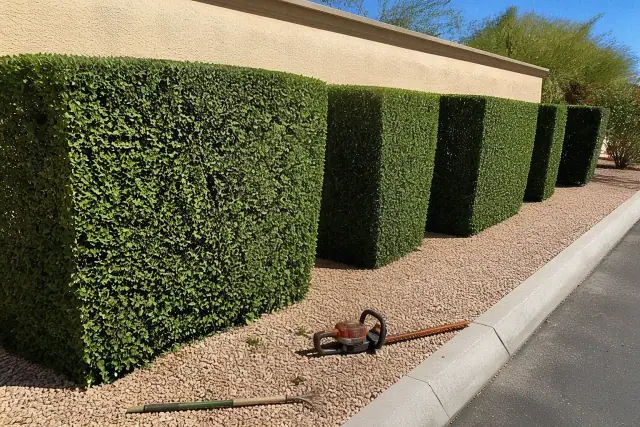
Half-trimmed hedge with hedge trimmers on the ground at a residential property in Phoenix, AZ.

Boxwood cubes, cone-shaped junipers, and flat-top privet hedges need frequent light trims to keep clean lines. We cut a slight taper so the wider base receives sunlight and stays full instead of becoming bare below.

Request Estimate

Natural Shrub Pruning

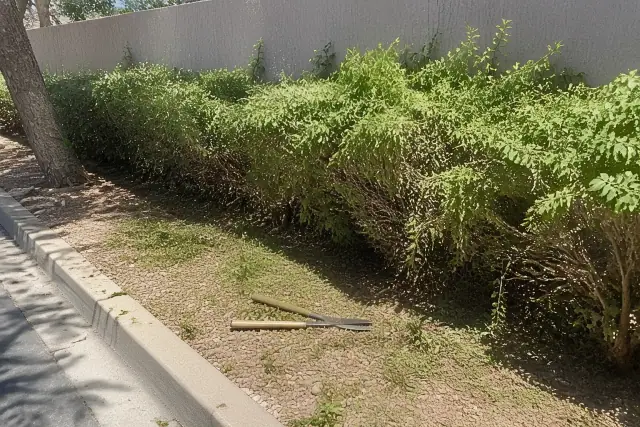
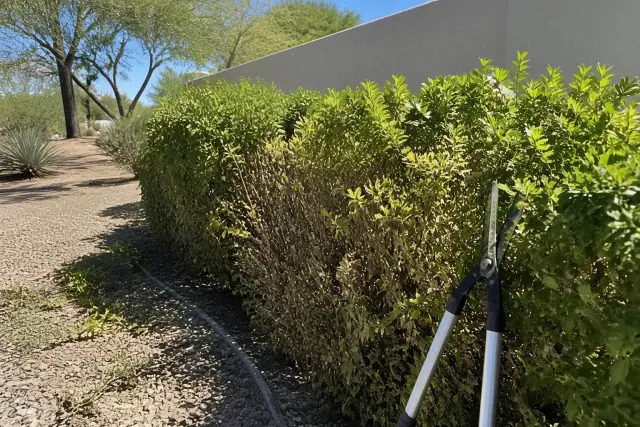
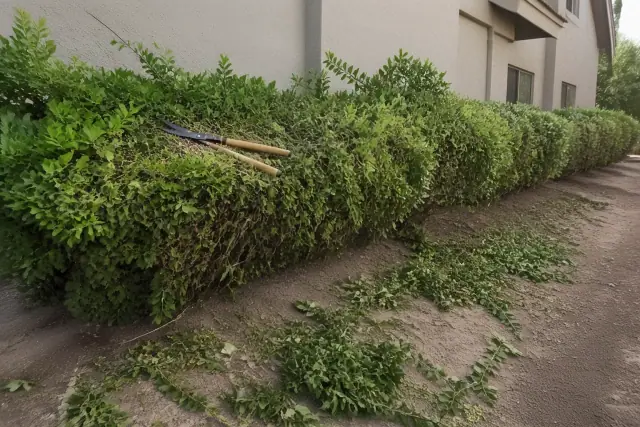
Untrimmed hedge with manual hand shears resting on a branch in a Phoenix, AZ landscape with crushed granite ground cover.

Informal hedges and native borders are pruned selectively to control size without erasing their movement. This approach preserves the natural silhouette of brittlebush, creosote, Texas sage, and other desert-adapted plantings.

Request Estimate

Residential Shrub Trimming

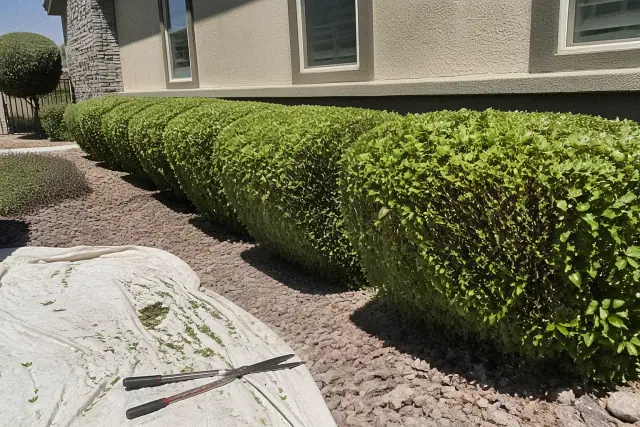
Freshly trimmed hedge with hand shears on a drop cloth in a Phoenix, AZ yard.

Homeowner visits can cover a single overgrown bush by the entry or a full perimeter of shrubs and hedges. Crews work carefully around pools, patios, and play areas, then pair the trimming with edging and debris cleanup when requested.

Request Estimate

Commercial & HOA Trimming

Hedge shears and untrimmed shrubs during a landscaping project in Phoenix, AZ.

Apartment complexes, retail centers, and HOA common areas often require recurring schedules tied to appearance standards in governing documents or leases. Property managers receive consistent crews and a single point of contact for planting, trimming, and cleanup coordination.

Request Estimate

Seasonal Desert Shrub Care

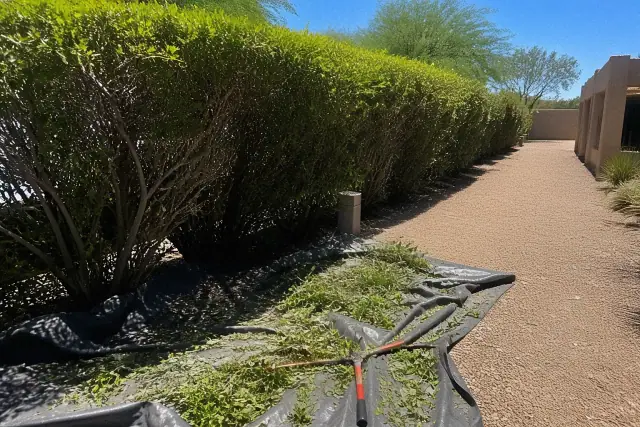
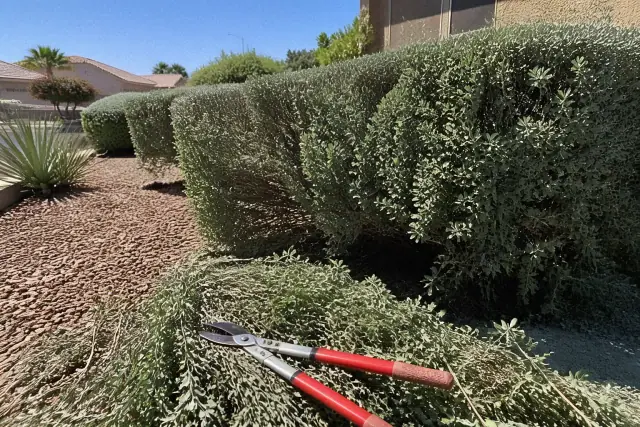
Hand-pruning an untrimmed desert shrub hedge in Phoenix, AZ, with organic clippings on the ground.

Heavier cuts are timed for cooler periods, while summer work stays light to avoid sun scald and moisture stress. Spring flush, summer stress, fall growth, and winter dormancy each call for a different trimming intensity.

Request Estimate

Integrated Landscape Maintenance

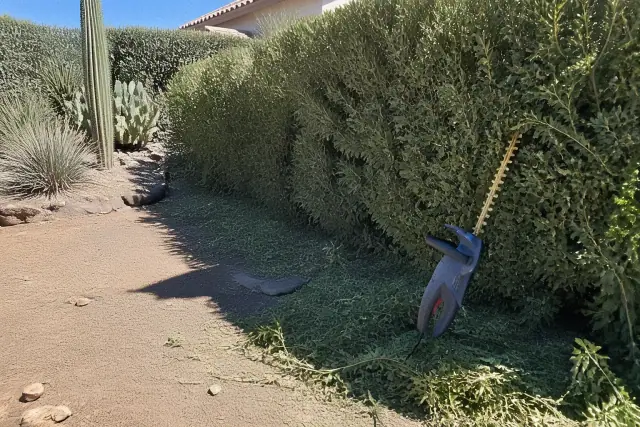
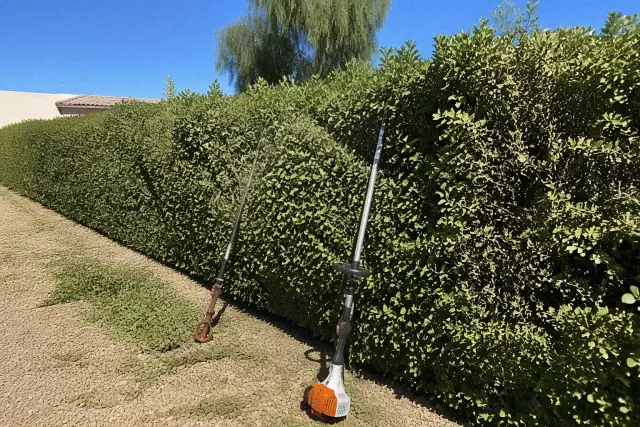
Half-pruned hedge in a Phoenix, AZ desert landscape with hedge trimmers resting against the bushes.

Shrub work can be bundled with lawn care, weed control, irrigation repair, seasonal cleanup, and rock or gravel upkeep. One coordinated visit lets the same crew manage trimming debris, mowing clippings, and cleanup instead of sending several trucks in one week.

Request Estimate
Trimming Approaches

Trimming Styles for Phoenix Landscapes

Plant form, design intent, heat exposure, property use, and maintenance frequency all affect the right approach. These five service patterns show how the same core pruning principles adapt to different Phoenix landscapes.

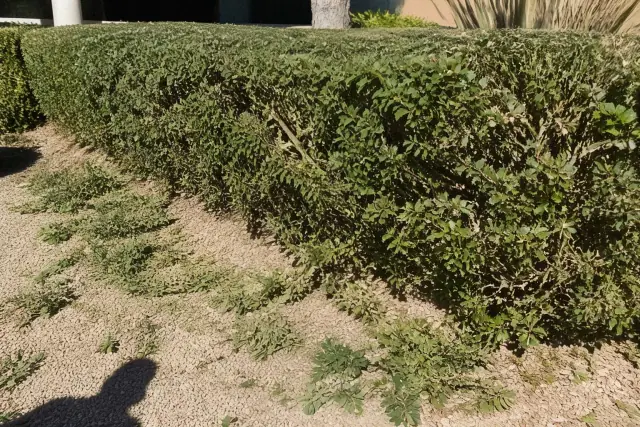
Architectural hedges with clean geometric lines and pruning tools over crushed granite in Phoenix, AZ.

Formal, Architectural Hedges

Formal hedge trimming supports the crisp geometry used around driveways, entries, and manicured borders. Small, frequent adjustments hold the line without repeatedly forcing a plant back from heavy overgrowth.

  • Flat-top hedges along driveways and walkways
  • Crisp boxwood cubes for formal beds
  • Cone-shaped junipers at entries
  • A slight taper that keeps sunlight at the base
  • Frequent light trims for a clean profile
Request Estimate
Sculpted hedge border with hand shears in a xeric landscape during midday sunlight in Phoenix, AZ.

Informal and Natural Borders

Informal pruning controls size while leaving the plant's natural movement visible. Selective cuts are especially useful where a rounded or squared profile would fight the species' growth habit.

  • Selective branch removal instead of surface shearing
  • Natural silhouettes for desert-adapted shrubs
  • Size control without erasing plant movement
  • Timing that respects current bloom cycles
  • Hand-tool cuts above outward-facing buds
Request Estimate
Structural pruning of native desert shrubs with hedge shears on decomposed granite in Phoenix, AZ.

Desert-Adapted Shrub Care

Brittlebush, creosote, and Texas sage grow in flushes tied to moisture and heat. Their maintenance should protect the canopy during stressful periods and preserve the looser forms that suit xeriscaped properties.

  • Heavier pruning during cooler weather
  • Light summer touch-ups that limit sun scald
  • Timing based on monsoon-driven growth flushes
  • Canopy retention over exposed root zones
  • Care compatible with reduced irrigation schedules
Request Estimate
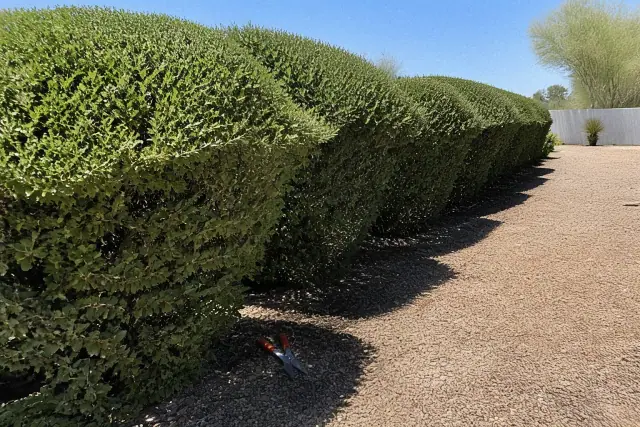
Manual hedge shears resting on a partially trimmed row of shrubs at a residential property in Phoenix, AZ.

Residential Property Trimming

Residential work in Arcadia, Ahwatukee, and North Phoenix ranges from entry shrubs to complete front-and-back-yard trimming. The crew plans access around the features that make each yard different.

  • Single overgrown bushes near doors and windows
  • Full perimeters of hedges and shrubs
  • Careful work around pools and patios
  • Protected access around play areas
  • Optional edging and coordinated yard cleanup
Request Estimate
Hedge trimmers resting against an untrimmed desert shrub row during landscaping work in Phoenix, AZ.

Commercial and HOA Maintenance

Recurring commercial and HOA trimming keeps shared landscapes aligned with written appearance standards. Consistent scheduling also helps avoid the visible swings between overgrowth and aggressive correction.

  • Apartment complex shrub schedules
  • Retail center entrance and storefront trimming
  • HOA common-area hedge shaping
  • Consistent crews and one point of contact
  • Coned work areas near pedestrians and vehicles
Request Estimate
Finding Your Right Fit

Choosing the Right Trimming Approach

Start with the plant species, current health, and intended design. A formal hedge may need monthly line control, while an informal native border can retain its shape for longer; heat exposure, bloom timing, irrigation, storm damage, and nearby structures further influence the plan.

ANSI A300 Plant Health Standards

We use ANSI A300 pruning standards, sharpened tools, and clean cuts selected for the branch size. Tools are cleaned between properties to reduce disease transfer, and older wood is handled with loppers or hand saws instead of forcing power shears through it.

Sonoran Desert Plant Knowledge

Our lead trimmers have spent years working with this heat and soil profile. They account for monsoon growth, winter dormancy, bloom cycles, and the different responses of native and ornamental shrubs before choosing how much to remove.

Licensed & Insured Crews

Our crews carry Arizona Registrar of Contractors credentials, and the business is licensed and insured for residential, commercial, and HOA work. Team members use eye protection and gloves and follow OSHA guidance around powered tools, structures, walkways, and active work areas.

What Sets Us Apart

Why Choose Phoenix Expert Landscaping for Trimming?

Every estimate begins with a property walk, plant-health review, and a conversation about the profile you want. We provide a written price before cutting, offer both one-time and recurring plans, and finish with debris removal so the property is ready to use when the crew leaves.

Get a Free Estimate

Heat-Stressed, Overpruned Shrubs

Heavy pruning from June through August can expose bark and root zones while Phoenix temperatures regularly exceed 105 degrees. A healthy single trim generally removes no more than 20 to 30 percent of the canopy, with lighter work during peak heat.

Bare and Woody Hedge Centers

Texas sage and Indian hawthorn left unchecked for two or three seasons can develop hollow, woody centers that may not fill back in. Regular selective pruning and a sun-friendly taper help lower growth remain dense.

Blocked Walkways and Sightlines

Overgrown hedges can narrow walkways, hide driveway views, and crowd entrances. Height and thickness control keep foliage within the intended bed while preserving safe access around homes, storefronts, and shared community spaces.

Exposed Irrigation and Lighting

Roots and lower branches often sit close to drip irrigation and low-voltage landscape lighting. We flag and route around those lines before cutting so tools and foot traffic do not create avoidable damage near the root ball.

Pests, Disease, and Dieback

Dense interiors can trap humidity even in a dry climate, creating favorable conditions for fungal issues, aphids, and whiteflies. Opening the canopy improves airflow and makes pest damage or dieback easier to spot before it spreads through a hedge row.

Storm Damage and Heavy Overgrowth

Monsoon wind damage and long-neglected growth require more assessment, labor, and green-waste hauling than routine maintenance. Cutting into old wood can also slow recovery and leave bare patches through a full growing season, so we check plant health before shaping.

How it works

Our Shrub & Hedge Trimming Process

A consistent process protects the plants, surrounding property features, and the people using the space. From the opening walk-through to final debris removal, each step establishes what to cut, how to cut it, and how to leave the area clean.

01.

Walk the Property

We review every hedge run and shrub bed, noting access, nearby structures, pools, patios, pedestrian areas, and the amount of debris the work will create.

02.

Identify Plant Health and Type

The crew identifies the hedge or shrub type, current shape, storm damage, dieback, pests, and seasonal stress before deciding how much material can be removed safely.

03.

Confirm the Target Profile

We confirm whether the goal is a formal flat top, a defined architectural form, or a softer natural screen, then set the appropriate height and width with the customer or property manager.

04.

Protect Lines and Work Areas

Drip irrigation, landscape lighting, gutter drains, walkways, and active vehicle areas are identified first. Commercial and HOA work zones are coned off while powered blades are operating.

05.

Prune with the Right Tools

Bypass shears handle precise ornamental cuts, hedge trimmers shape longer runs, and loppers or hand saws manage thicker growth. Cuts are clean, slightly angled, and placed to direct regrowth toward the desired form.

06.

Remove Debris and Plan Care

Clippings and cut branches are removed from lawns, beds, walkways, and drains. If recurring care makes sense, we recommend a schedule based on the species, growth rate, season, and appearance standard.

Plan Your Trimming

Schedule a Shrub & Hedge Consultation

Request a free estimate for one-time trimming or a recurring residential, commercial, or HOA plan. We will walk the property, confirm the scope, and provide a written price before work begins; same-day service is available for many requests when crew scheduling allows.

Trimming Help

Shrub & Hedge Trimming FAQs

Phoenix pruning schedules depend on species, heat, growth rate, and the look you want to maintain. These answers cover timing, technique, pricing, cleanup, and recurring service for local shrubs and hedges.

Call Our Trimming Team

Light trimming usually works best in late spring after frost risk has passed, when plants are ready for their strongest growth flush. Heavier structural pruning is better during late-winter dormancy, while summer work should stay light. We schedule around the species because desert natives and ornamentals respond differently.

Avoid heavy pruning during the hottest stretch from June through August, when plants are already under heat stress. Cutting during active flowering can remove blooms, and fresh cuts made immediately before a hard frost are more vulnerable to cold damage. Storm- or wind-damaged hedges should be assessed before a full shaping pass.

Shape the plant slightly wider at the base than the top so lower branches receive enough sunlight to stay full. Make clean, angled cuts with sharpened bypass shears just above a node or bud facing the direction where new growth should fill in. Match the amount removed to the plant's health and the season.

Do not remove more than one third of the foliage in a single session, use dull blades that crush stems, or make a hard cut during peak summer heat. Avoid a flat top with straight vertical sides because that shades lower branches and can create bare, leggy growth at the base.

Most structural cutbacks are best scheduled in late winter, typically January through February, after hard-frost risk but before the spring flush. A light early-fall trim can control size before dormancy. Brittlebush and Texas sage may benefit from a species-specific cut after their bloom cycle, often in late spring depending on monsoon timing.

Many Phoenix landscapes benefit from light trims every four to six weeks during active growth, plus a heavier winter structural cut. Formal hedges may need monthly service, while informal or native borders can often go eight to twelve weeks. Oleander and Texas sage generally grow faster than boxwood, so the exact interval should follow the plants on the property.

Nationally, hedge trimming averages around $429 per visit, with most jobs between $200 and $600; smaller shrubs commonly run $5 to $20 per bush, while larger hedges may be closer to $23 to $28 per linear section. Actual pricing depends on height, hedge length, density, storm damage, access, and debris volume. We provide a written price after a free property estimate.

The visit starts with a property walk to identify plant types, health, shape, access, irrigation, lighting, and any storm damage. We confirm the target profile, choose tools suited to the branch size, complete the cuts, and remove debris from lawns, beds, walkways, and drains.

Formal trimming maintains crisp lines on shapes such as boxwood cubes, cone-shaped junipers, or flat-top privet hedges. Informal trimming uses selective cuts to control size while preserving the natural movement of the shrub. The choice should match the original landscape design and the species' growth habit.

Yes. Debris removal is part of the trimming process, so clippings are not left on the lawn, across walkways, or near gutter drains. Larger overgrowth and storm-damage jobs may produce more green waste, which is considered when the estimate is prepared.

Yes. Service is available for residential yards, apartment complexes, retail centers, commercial storefronts, and HOA common areas. Commercial and HOA plans can use recurring schedules to keep hedges aligned with documented appearance standards.

Yes. Trimming can be coordinated with lawn care, weed control, irrigation repair, shrub fertilizing, seasonal cleanup, and rock or gravel landscape upkeep. Yearly plans account for four working seasons: spring flush, summer stress, fall growth, and winter dormancy.

We provide free estimates for residential and commercial trimming across Phoenix, Scottsdale, Tempe, Mesa, Chandler, and the greater Salt River Valley metro area. Same-day service is available for many requests depending on crew scheduling, and there is no obligation to choose a recurring plan just to receive a quote.