Proudly serving Phoenix, Scottsdale, Mesa, Tempe, Chandler, Gilbert & surrounding areasCall or Text 24/7: 602-449-0493
Aerial drone view of a suburban neighborhood with terra-cotta roofs and desert landscaping in Phoenix, AZ.

Landscape Maintenance, Weed Management, and Property Upkeep in Peoria, AZ

Phoenix Expert Landscaping provides landscape maintenance for residential and commercial properties throughout Peoria, Arizona. Our crews handle yard cleanup, lawn care, weed control, tree trimming, shrub and hedge trimming, planting, desert landscaping, rock and gravel installation, and irrigation repair. Each maintenance plan is built around Sonoran Desert growing conditions rather than cool-season turf assumptions. Free property estimates help match the scope and schedule to the landscape before recurring work begins.

Caliche-heavy soil, 300+ days of sun, and summer temperatures that regularly top 110°F put roots, turf, and drip systems under constant stress. Peoria properties also range from older xeriscapes to newer HOA-governed yards, so plant palettes, rock colors, and maintenance cycles can vary by community. We adjust mowing, pruning, weed treatment, and irrigation timing to the season and flag repairs or plant replacement needs before extra work starts. That structured approach keeps the work aligned with both property conditions and the approved scope.

Service extends across Vistancia, Trilogy at Vistancia, Arrowhead Ranch, Fletcher Heights, Old Town Peoria, and the Lake Pleasant corridor.

★ ★ ★ ★ ★4.9/5 Average Rating - 20+ Years of Experience - Peoria Landscaping Company Specialists - Residential & Commercial
Peoria Landscaping Services

Landscape Maintenance Services in Peoria, AZ

Choose recurring landscape maintenance or targeted help for turf, weeds, trees, planting beds, hardscape ground cover, and irrigation. Each service is adapted to desert horticulture, seasonal growth, caliche soil, and the property's existing plant mix.

Landscape Maintenance

Landscaper clearing overgrown vegetation and pruning agave plants in a yard in Peoria, AZ.

Recurring visits combine mowing, edging, weed control, plant care, and cleanup so one crew can manage the whole yard. Weekly, bi-weekly, and monthly plans are available according to property size, plant density, season, and growth rate.

Explore Service

Yard Cleanup

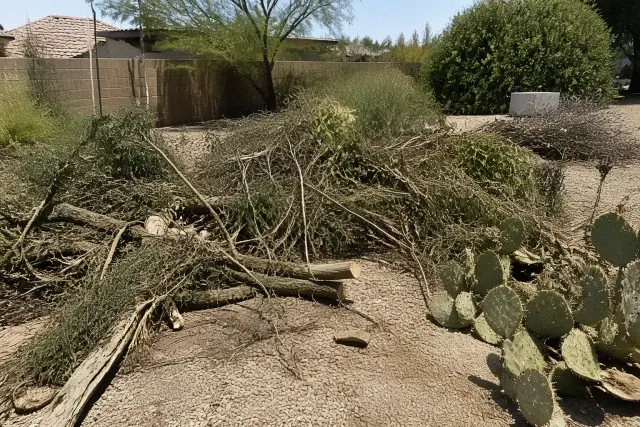
Yard cleanup with piles of organic waste, fallen branches, and cleared soil in a desert landscape in Peoria, AZ.

Spring and fall cleanups remove palo verde and mesquite seed pods, leaf litter, and dead plant material before it becomes fire fuel or pest habitat. Debris is hauled off-site, and cleanup can be coordinated ahead of seasonal HOA inspections.

Explore Service

Lawn Care

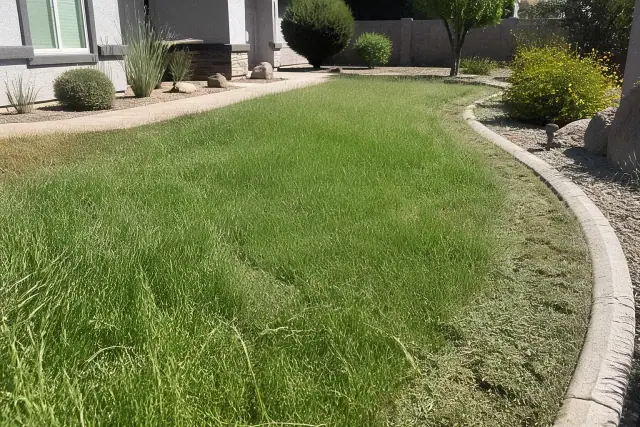
Professional lawn mowing service in progress at a residential property in Peoria, AZ.

Hybrid Bermuda and winter annual ryegrass need different mowing heights and seasonal schedules. Service can include weekly or bi-weekly mowing, edging, fertilization timed to Bermuda's summer growth, and aeration to break through compacted caliche.

Explore Service

Weed Control

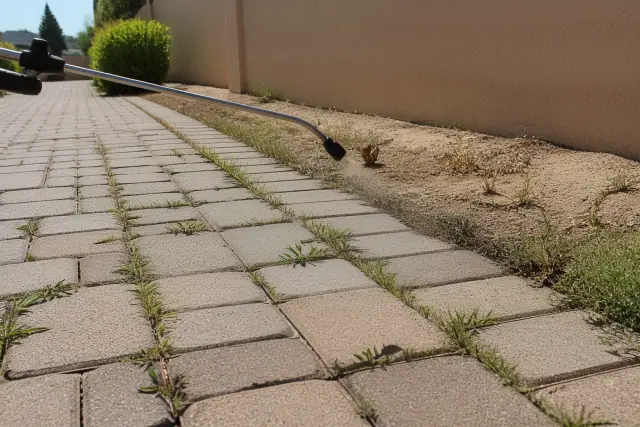
Technician spraying liquid herbicide on weeds between pavers in a Peoria, AZ landscape.

Puncturevine, spurge, and invasive Bermuda grass in rock beds are recurring Peoria weed problems. Early-spring and fall pre-emergent treatments interrupt germination, while targeted post-emergent applications address active growth and are timed around irrigation under Arizona Department of Agriculture guidelines.

Tree Trimming

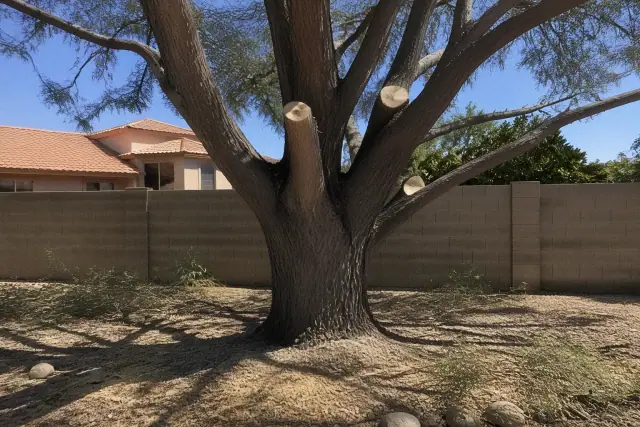
Tree trimming in progress with canopy thinning and wood chips on the ground in Peoria, AZ.

Palo verde, mesquite, and ironwood benefit from structural pruning that reduces canopy resistance without topping the tree. Work follows ANSI A300 standards, and the recommended pre-monsoon window from April through June prepares desert trees for winds that regularly reach 50-60 mph.

Shrub & Hedge Trimming

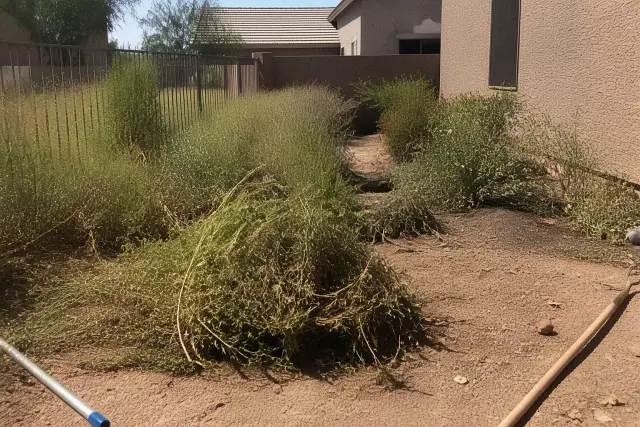
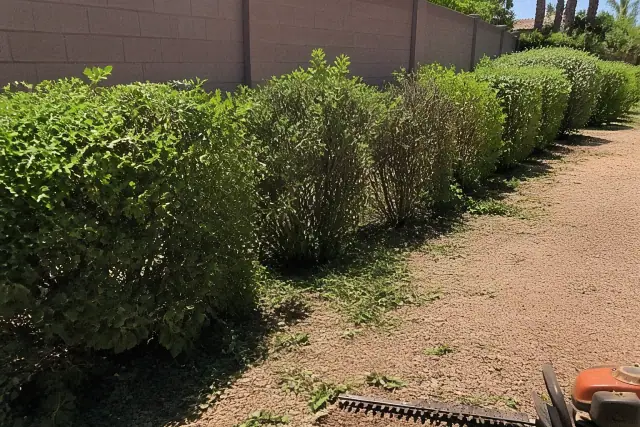
Half-pruned bushes with scattered clippings in a residential yard in Peoria, AZ.

Texas sage, brittlebush, oleander, ficus, and photinia need species-aware shaping rather than repeated hard shearing. Shrubs may need attention every 4-6 weeks in spring and summer, while hedge work is scheduled around growth flushes and avoids extreme July heat that can scorch fresh cuts.

Planting Services

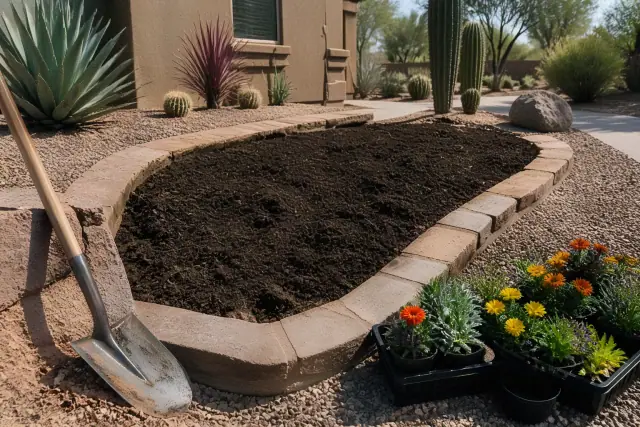
A shovel and plants in a soil bed framed with stone at a landscaping worksite in Peoria, AZ.

Plant selections come from the Arizona Municipal Water Users Association approved list and are matched to sun exposure and drainage. Correct planting depth, amended backfill, and a temporary drip tie-in help new plants establish through their first growing season without trapping water against roots in caliche soil.

Desert Landscaping

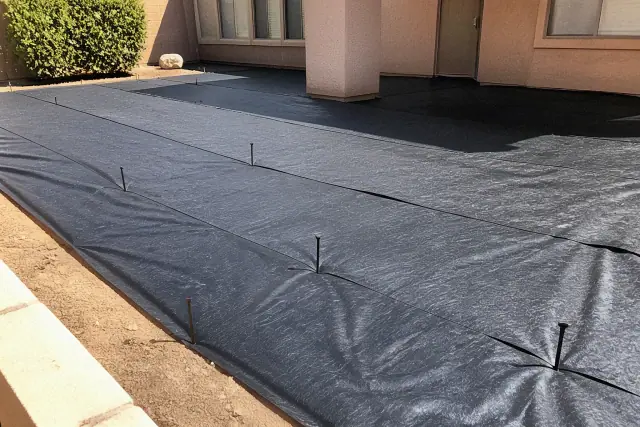
Weed barrier fabric installation for desert landscaping in Peoria, AZ.

Xeriscape conversions can combine boulders, decomposed granite, agave, desert marigold, and other drought-tolerant plantings to reduce heavy irrigation demand. Native plant landscaping can lower installation costs by $2,000 to $4,000 per acre compared with turf-heavy designs while reducing long-term water use after establishment.

Rock & Gravel Landscaping

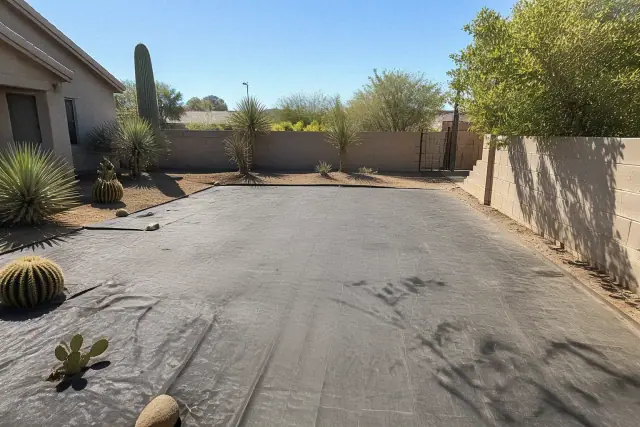
Weed barrier fabric laid over a flat landscape foundation in Peoria, AZ with desert plants and sharp sunlight shadows.

Decomposed granite, riprap, river rock, and gravel are selected for ground cover, erosion control, or drainage needs. Proper grading, desert-UV-rated weed barrier, suitable depth, and clean edging help keep material contained during monsoon runoff and aligned with HOA color requirements.

Irrigation Repair

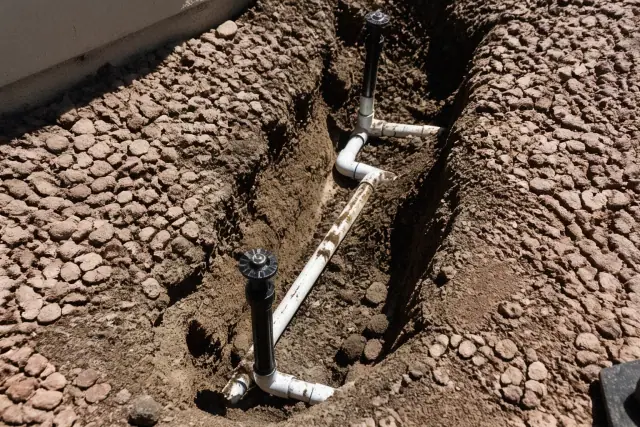
Irrigation repair on a residential property in Peoria, AZ, showing an open trench with exposed PVC pipes and sprinklers.

Mineral-heavy water can clog drip emitters, while moving soil can crack PVC fittings or expose hidden leaks. Repair work includes broken valves, emitters, fittings, leak location, and controller programming for seasonal watering changes.

Choosing a Maintenance Plan

How to Choose the Right Landscape Maintenance Plan in Peoria

The right plan starts with the property's soil, turf, plant palette, irrigation zones, and service goals. Visit frequency should follow actual growth and seasonal demand rather than a fixed template. HOA requirements, commercial documentation needs, and the scope approved during the estimate also shape the final schedule.

Soil and Drainage Fit

Caliche is a cemented calcium-carbonate layer that can block root penetration and drainage. A plan should account for aeration, planting-hole preparation, grading, and irrigation run times so water reaches roots without collecting around them.

Turf and Seasonal Growth

Bermuda grows actively through summer, while overseeded ryegrass changes winter mowing height and timing. Residential plans commonly use weekly or bi-weekly service during the March-through-October growing season, then shift toward monthly visits as cooler weather slows growth.

Water-Smart Irrigation

Peoria lies within the Phoenix Active Management Area regulated by the Arizona Department of Water Resources. Controller run times are adjusted at least four times a year to follow seasonal evapotranspiration, monsoon rainfall, and peak summer demand instead of relying on one year-round setting.

HOA and Material Requirements

Vistancia, Trilogy at Vistancia, and other HOA-governed communities may specify approved plant palettes, rock colors, and upkeep standards. Maintenance and installation choices should be checked against those documents before materials are changed.

Property Type and Visit Scope

Residential visits often focus on curb appeal, backyard water use, and a specific mix of turf and xeriscape. Commercial plans may also include parking-lot islands, retention basins, perimeter landscaping, larger crews, low-traffic scheduling, and visit logs for property managers.

Frequency and Budget

Weekly, bi-weekly, and monthly plans correspond to roughly every 7, 14, or 30 days, but lot size and plant density can change the work required at each visit. Bi-weekly maintenance for a standard Peoria residential lot commonly averages around $70 per visit, so a property walk-through and free estimate provide a more useful scope than a generic citywide price.

Peoria Landscape Challenges

Common Landscape Problems for Peoria Properties

Average annual rainfall is around 8 inches, yet a monsoon storm can drop an inch in under an hour and send water across poorly graded beds. At the other extreme, summer surface-soil temperatures can exceed 140°F, accelerating evaporation and plant stress. Maintenance should address both dry-season exposure and sudden runoff instead of treating Peoria like a mild-climate market.

Request a Property Walk-Through

Caliche-Blocked Drainage

Compacted caliche can trap irrigation water above a cemented layer, restrict roots, and contribute to standing water or root rot. Breaking through the layer during planting or aeration and adjusting run times helps water move into the usable root zone.

Heat and UV Stress

Low humidity, intense UV exposure, and summer heat increase transpiration and can scorch fresh pruning cuts. Seasonal watering and avoiding aggressive hedge trimming during extreme July conditions protect plants when recovery is slowest.

Monsoon Wind Damage

Dense canopies catch monsoon winds and put weak attachments under extra load. Structural pruning and pre-monsoon thinning reduce resistance, while post-storm walk-throughs identify broken limbs and other damage before the next maintenance visit proceeds.

Clogged or Leaking Irrigation

Mineral buildup can block drip emitters, and cracked fittings or failed valves may waste water without an obvious surface puddle. Function checks, leak location, component repair, and seasonal controller changes keep irrigation matched to the landscape.

Weeds in Rock Beds

Puncturevine, spurge, and spreading Bermuda can break through or creep into decorative rock. Well-timed pre-emergent treatment, targeted control of active growth, intact weed barrier, and clean edging work together to reduce repeat pressure.

Runoff and Rock Migration

Brief, heavy monsoon rain can move loose gravel, expose soil, and cut channels across sloped lots near the Skunk Creek wash. Correct base grading, material depth, riprap where appropriate, and defined edging help stabilize the surface.

Why Choose Us

Why Choose Phoenix Expert Landscaping in Peoria?

Peoria grew from 154,065 residents in 2010 to 190,985 in 2020 and is Arizona's sixth-largest city by land area, creating a broad mix of established yards, newer HOA developments, and commercial corridors. Phoenix Expert Landscaping built its crews and equipment around those changing property conditions and Sonoran Desert horticulture. The result is a maintenance scope shaped by the site rather than a generic lawn-care template.

Sonoran Desert Experience

Bermuda in Peoria needs different fertilization timing than fescue lawns just 30 miles away at higher elevations. Local planning also accounts for City of Peoria right-of-way rules and the MyPeoriaAZ reporting process when a landscape issue involves a public area.

Clear Extra-Work Approval

Each visit starts with a check for irrigation faults, plant-health concerns, and storm or pest damage. Repairs or replacements beyond the normal scope are documented and flagged before extra work begins, helping prevent surprise charges.

Residential and Commercial Care

Home plans can combine recurring maintenance with one-time cleanup and irrigation repair, while commercial work can be scheduled during low-traffic hours. Consistent visit logs give property managers documentation for ownership groups or municipal compliance.

Structured Maintenance Visits

Our Landscape Maintenance Process in Peoria

Every visit follows a consistent order so cuttings do not scatter into areas that were already cleaned. The crew checks changing conditions first, completes the approved recurring tasks, removes debris, and reports work that needs a separate scope.

01.

Walk Through the Property

The visit begins with a review of irrigation function, plant health, and any storm or pest damage that developed since the last service.

02.

Check Irrigation Function

Drip zones, emitters, valves, visible fittings, and controller settings are checked for clogs, leaks, or seasonal adjustments that may affect the landscape.

03.

Mow and Edge Turf

Bermuda or ryegrass is cut at the appropriate seasonal height, then edges are defined before crews move into planting beds.

04.

Treat Weeds and Inspect Plants

Active weeds receive targeted treatment, while shrubs and other plantings are checked for dead wood, stress, and shaping needs.

05.

Trim, Clean, and Haul

Approved shrub and hedge shaping is completed before leaf litter, grass, seed pods, and trimmings are gathered and hauled off-site.

06.

Report and Schedule Larger Work

The crew documents irrigation repairs or plant replacements outside the recurring scope. Larger seasonal work, including pre-monsoon tree trimming, is quoted and coordinated separately with the maintenance calendar.

Property-Fit Maintenance

Landscape Plans for Peoria Homes & Businesses

Case Study 1: Residential schedules: Turf-heavy and mixed xeriscape yards commonly use weekly or bi-weekly visits during active growth from March through October, then shift toward monthly winter care as growth slows.

Case Study 2: Commercial coordination: Retail centers near the P83 entertainment district and office properties along the Loop 101 corridor can use low-traffic scheduling, visit logs, and crews sized for parking islands, retention basins, perimeter beds, or multi-acre grounds.

Case Study 3: Regional coverage: Service reaches Peoria neighborhoods and nearby Glendale, Surprise, Sun City, and northern Maricopa County communities bordering Yavapai County. For a closer look at the same desert-first approach in another Valley location, visit Paradise Valley, AZ .

Free Landscape Estimate

Schedule Your Peoria
Landscape
Estimate

Request a property walk-through for a clear maintenance scope based on lot size, plant density, turf, irrigation, and visit frequency. The free estimate sets expectations before recurring or one-time work begins.

Peoria Landscaping Questions

Landscape Maintenance FAQs in Peoria, AZ

These answers cover local pricing, service frequency, desert soil, irrigation, plant choices, monsoon preparation, and recurring maintenance. For a property-specific scope, request a free estimate after a landscape walk-through.

Call Our Landscaping Team

Bi-weekly service for a standard Peoria residential lot commonly averages around $70 per visit, while broader residential landscaping upkeep nationally averages roughly $300 per month, or about $3,600 annually, depending on scope. Mowing alone typically runs $50 to $250 per visit, and major tree removal or restoration may run $500 to $2,700 depending on size and condition. Commercial properties are quoted separately by square footage and frequency. A free property estimate provides the actual scope and cost.

Bermuda in active summer growth typically needs weekly mowing, while bi-weekly service is often sufficient as growth slows. Winter ryegrass needs a higher mowing height than Bermuda, so both blade height and visit frequency should change with the season.

Caliche is a cemented calcium-carbonate layer found below the surface in many Peoria yards. It can block drainage and root penetration, so planting and aeration may need to break through it and irrigation must be scheduled to avoid standing water and root rot.

The preferred structural-pruning window is April through June, before monsoon season typically runs from July through September. Thinning palo verde, mesquite, and ironwood can reduce resistance to 50-60 mph winds, while heavy trimming during intense summer heat can scorch fresh cuts.

Drip irrigation is efficient for desert plants because it limits evaporation and applies water close to the root zone. Turf may use targeted spray heads, while planting beds generally benefit from drip; the final layout should reflect the property's soil, plant mix, and irrigation zones.

Plants from the Arizona Municipal Water Users Association approved list can be matched to the yard's sun exposure and drainage. Palo verde, mesquite, ironwood, Texas sage, brittlebush, desert marigold, and agave provide low-water or desert-adapted options, but placement should still account for mature size and soil conditions.

Schedule structural tree trimming before July, confirm that grading sends water away from structures, and clear leaves or debris from gutters, retention basins, and planting beds. Irrigation should not run during or immediately after storms, and loose rock or gravel should be checked where runoff crosses the property.

Recurring visits can combine mowing, edging, weed control, shrub and hedge care, and debris removal. Irrigation function and plant health are checked during the walk-through, while repairs, replacements, and larger tree work are documented and scoped separately.

Weekly service visits every 7 days and fits turf-heavy lots or peak growth. Bi-weekly service visits every 14 days and suits many standard residential yards, while monthly service visits every 30 days for slower-growing, low-turf, or winter landscapes. Plant density and seasonal conditions can still change the work included.

Yes. Communities may regulate plant palettes, rock colors, edging, and seasonal appearance, so those documents should guide material changes and recurring upkeep. Cleanup can also be coordinated ahead of a known seasonal inspection.

Commercial contracts may cover parking-lot islands, retention basins, perimeter beds, and multi-acre grounds in addition to routine mowing, trimming, and cleanup. Crews can work during lower-traffic periods, and visit logs help property managers document service for ownership groups or municipal compliance.

Yes. Spring cleanup, fall cleanup, irrigation repair, and other one-time services can be handled alongside or separately from recurring maintenance. The property walk-through identifies the immediate scope before work is scheduled.

Puncturevine, spurge, and invasive Bermuda grass are common problems in Peoria rock beds. Early-spring and fall pre-emergent applications can interrupt germination, while targeted post-emergent treatment addresses weeds that are already growing.

Controller run times should be reviewed at least four times a year to reflect evapotranspiration, summer heat, cooler growth, and monsoon rainfall. A fixed year-round timer can overwater during cooler periods or leave plants short during peak summer demand.

Service covers Vistancia, Trilogy at Vistancia, Arrowhead Ranch, Fletcher Heights, Old Town Peoria, the Lake Pleasant corridor, and Sun City Grand-adjacent areas. Regional coverage also includes Glendale, Surprise, Sun City, and northern Maricopa County communities near Yavapai County.