Proudly serving Phoenix, Scottsdale, Mesa, Tempe, Chandler, Gilbert & surrounding areasCall or Text 24/7: 602-449-0493
Aerial drone view of a suburban neighborhood with terra-cotta roofs and desert landscaping in Phoenix, AZ.

Landscape Maintenance, Weed Control, and Irrigation Repair in Chandler, AZ

Phoenix Expert Landscaping provides landscape maintenance for residential and commercial properties throughout Chandler. Our crews handle yard cleanup, lawn care, weed control, tree trimming, and shrub and hedge trimming. We also install plants, build desert and rock landscapes, and repair irrigation systems. Weekly, biweekly, and monthly plans are shaped around the property rather than a generic checklist.

Chandler's low-desert conditions can push soil temperatures above 140 degrees beside summer asphalt, while winter brings occasional frost. Caliche soil, monsoon debris, and irrigation limits add another layer of stress for turf, trees, and shrubs. Our licensed and insured crews understand those local conditions and the watering expectations within Salt River Project and City of Chandler service areas. We begin with a property walkthrough so the estimate reflects the work your landscape actually needs.

Chandler grew from 236,123 residents to 275,987 over the decade ending with the 2020 census, making it Maricopa County's fourth-most populous city. That growth has created a mix of mature yards, new-build desert landscapes, HOA communities, and commercial campuses that need different care. Call for a free estimate after an on-site walkthrough.

★ ★ ★ ★ ★4.9/5 Average Rating - 20+ Years of Experience - Chandler Landscaping Company Specialists - Residential & Commercial
Full-Service Landscaping

Landscape Maintenance and Services in Chandler, AZ

Choose individual services or combine routine care, seasonal cleanup, planting, desert landscaping, and irrigation work into one property-specific plan. We work throughout Chandler's residential neighborhoods, HOA communities, commercial corridors, and business parks. Beyond the city, we regularly serve Gilbert, AZ , Tempe, Mesa, Ahwatukee, Sun Lakes, and Queen Creek.

Landscape Maintenance

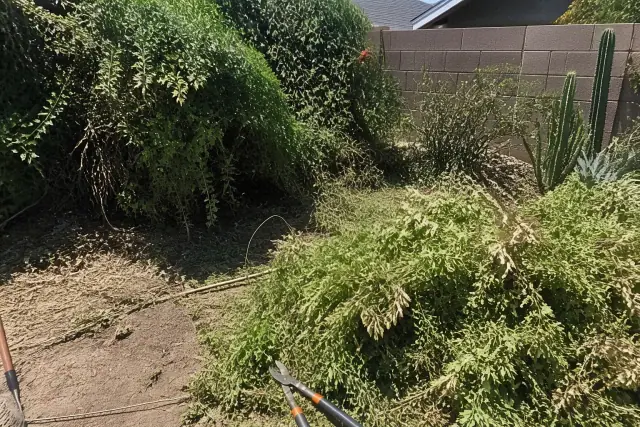
Worker using hedge shears to prune overgrown vegetation in a Chandler, AZ landscape.

Property-specific maintenance can combine mowing, edging, weed control, shrub and hedge trimming, and irrigation checks. Each visit follows a documented checklist, with developing valve, pest, tree, or drainage concerns reported to the homeowner or property manager.

Explore Service

Yard Cleanup

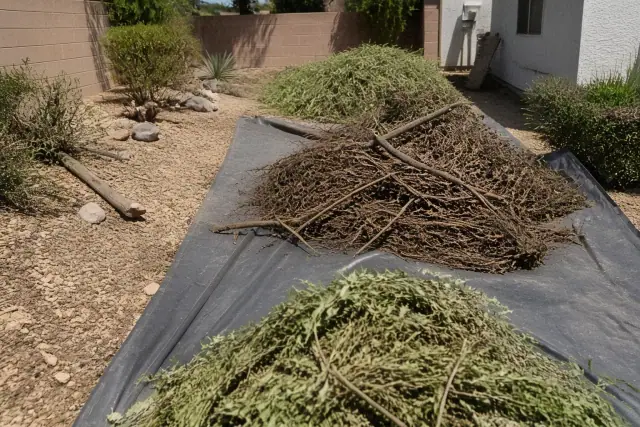
Yard cleanup with piles of organic waste on a tarp in a Chandler, AZ landscape.

Spring cleanup includes bed edging, mulch refresh, and irrigation checks before the hottest weather arrives. Fall visits focus on leaf and monsoon debris removal, bermuda overseed preparation, and an irrigation audit before winter dormancy.

Explore Service

Lawn Care

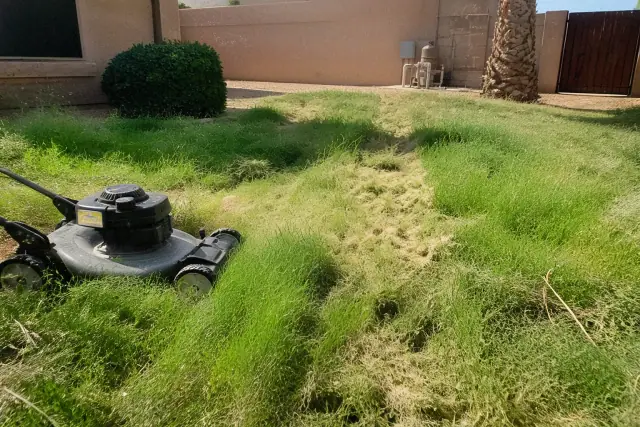
Uneven, dry lawn with weeds and thatch next to a stucco wall in Chandler, AZ.

Mowing height and frequency change with Chandler's two-season turf calendar. Bermuda is typically cut at 1 to 1.5 inches in summer, while fescue is raised to 2.5 to 3 inches in cooler weather; winter ryegrass and fertilization are scheduled around active growth.

Explore Service

Weed Control

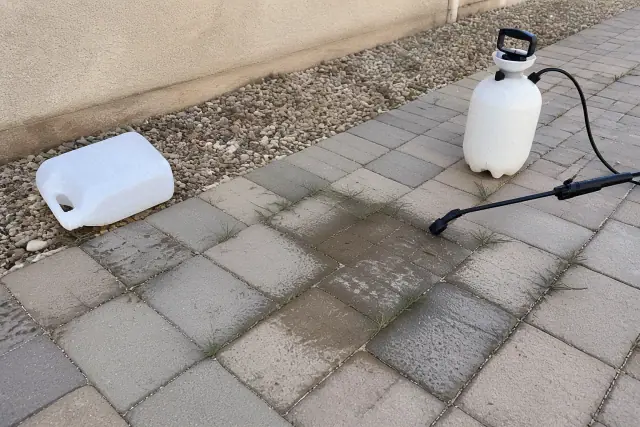
A pump sprayer applying weed control treatment to vegetation between pavers on a path in Chandler, AZ.

Weed pressure typically spikes twice each year: after monsoon rain brings summer annuals through gravel and again when London rocket and mallow appear in late winter. Pre-emergent applications are timed to soil-temperature thresholds, with post-emergent spot treatment for breakthrough growth.

Tree Trimming

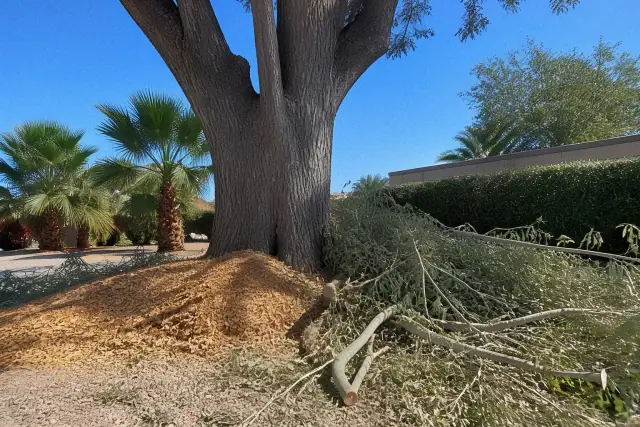
Fresh wood chips and pruned branches at the base of a large tree during trimming in Chandler, AZ.

Palo verde, mesquite, and acacia benefit from ANSI A300 structural pruning that thins the canopy without hat-racking it. Preparation matters because Chandler monsoon gusts regularly exceed 50 miles per hour in July and August; a dead or storm-damaged tree can cost $500 to $2,700 to remove depending on size and location.

Shrub & Hedge Trimming

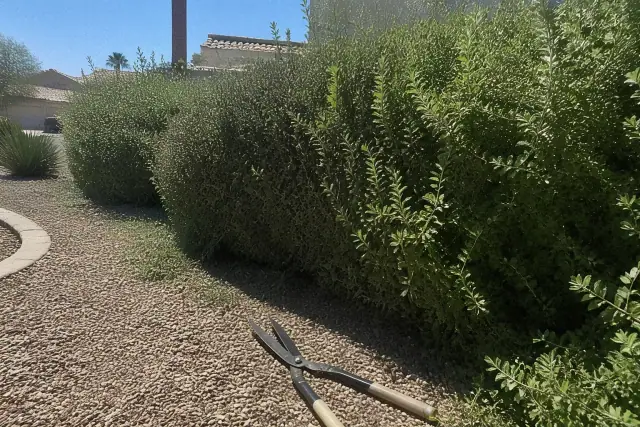
Untrimmed bushes and hedge shears in a xeric desert yard during landscaping work in Chandler, AZ.

Oleander, Texas sage, and boxwood are shaped on a consistent schedule so growth stays dense at the base and HOA-facing lines remain clean. Service also includes deadheading and a light inspection for issues such as sooty canker after monsoon humidity.

Planting Services

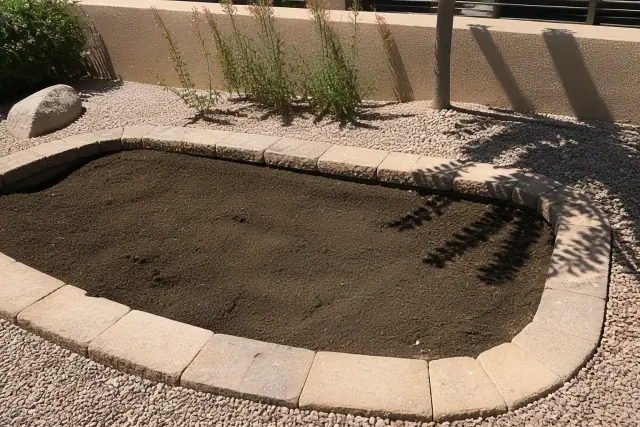
Prepared soil planter bed with stone edging for landscaping in Chandler, AZ.

Trees, shrubs, groundcover, and seasonal color are selected for Chandler heat and placed according to sun exposure. Planting includes amended backfill for compacted clay and a watering schedule tailored to the material's establishment period.

Desert Landscaping

Weed barrier fabric laid over a foundation in a desert landscaping project in Chandler, AZ.

Desert conversions combine decomposed granite, boulders, and low-water plants such as brittlebush, red yucca, and desert marigold. Designs follow Arizona Department of Water Resources guidance and can reduce long-term mowing, fertilization, and outdoor water demand.

Rock & Gravel Landscaping

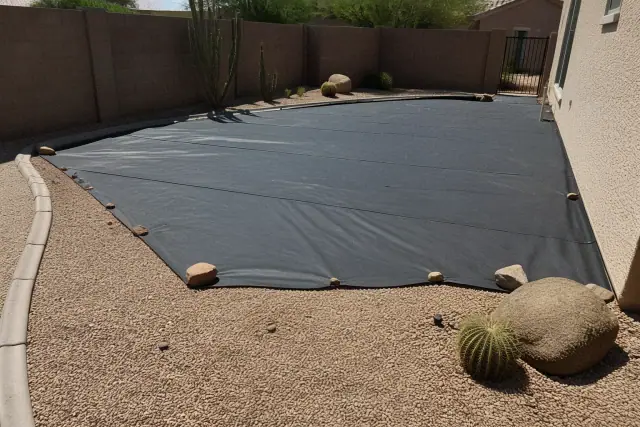
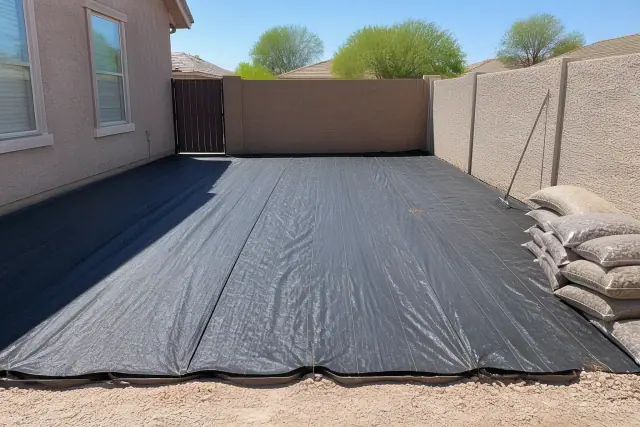
Black weed barrier fabric laid over soil in a Chandler, AZ residential yard, awaiting decorative rock installation.

Decomposed granite, river rock, and rip rap provide durable groundcover that reduces evaporation and tolerates intense UV exposure. Correct weed-barrier fabric, base compaction, material size, and drainage planning help rock beds resist weeds and monsoon washout.

Irrigation Repair

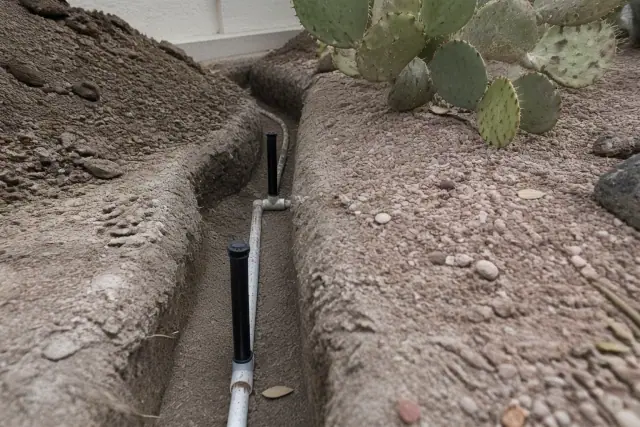
An exposed irrigation pipe and sprinkler head during a system repair in Chandler, AZ.

Irrigation diagnostics cover broken laterals, clogged emitters, stuck valves, and controller programming. Repairs and scheduling audits separate turf, shrub, and tree zones by root depth so the system delivers more appropriate coverage instead of running every area like a fixed spray lawn.

Planning Your Service

How to Choose Landscaping Services in Chandler

A useful plan starts with property use, turf type, sun exposure, soil drainage, irrigation zones, tree structure, and any HOA or commercial appearance requirements. The right mix may be routine maintenance, seasonal cleanup, targeted repair, or a gradual conversion from high-water turf to desert planting. Visit frequency and scope should follow actual growth and access rather than a one-size-fits-all citywide package.

Seasonal Turf Scheduling

Bermuda, fescue, and winter ryegrass do not share one mowing height or growth cycle. A suitable lawn plan changes cutting, fertilization, and visit timing as the active turf changes with the season.

Pre-Emergent Weed Timing

Effective prevention is scheduled before monsoon annuals and cool-season weeds emerge. Soil temperature guides the pre-emergent window, while spot treatment addresses growth that still breaks through.

Species-Aware Pruning

Desert trees need structural canopy work, flowering trees are timed around bloom, and citrus should be pruned lightly to avoid exposing bark to sunburn. The species and season should determine the cut.

Caliche and Drainage Planning

Dense caliche can trap water around new roots and redirect storm runoff across flat yards. Planting and design choices should account for hardpan, amended soil, base compaction, and a safe drainage path.

Water-Wise Desert Design

Low-water plant material, decomposed granite, boulders, and thoughtful turf reduction can lower ongoing water and maintenance demands. The layout still needs supplemental irrigation and access for practical upkeep.

Irrigation Zone Management

Turf, shrubs, and trees need different run times because their roots sit at different depths. Choose a plan that checks zone separation, emitters, valves, and controller settings instead of treating every planting area alike.

Chandler Landscape Issues

Common Landscape Problems on Chandler Properties

Heat, dense soil, short heavy storms, seasonal weeds, and aging irrigation components often interact rather than appearing alone. A walkthrough helps identify the underlying cause before maintenance, repair, or replacement work is scoped.

Request Property Estimate

Caliche and Poor Drainage

Caliche can sit from a few inches to a few feet below the surface across the East Valley. Standard planting holes may hold water against roots unless the hardpan is addressed or appropriate drainage is built into the installation.

Monsoon Wind and Flash Runoff

Chandler averages roughly 8 inches of rain a year, concentrated in winter storms from December through March and monsoon activity from July through September. A short storm can drop an inch of water in under an hour, overwhelming poorly graded yards and moving loose gravel.

Outdated Irrigation Scheduling

Broken drip laterals, clogged emitters, stuck valves, and old controller programs can leave some plants dry while wasting water elsewhere. Caliche movement and mineral-heavy water can make a visible leak only one part of the problem.

Seasonal Weed Surges

Summer annuals often emerge after monsoon moisture, while London rocket and mallow take hold in dormant turf during late winter. Missing the pre-emergent window makes an established infestation much more labor-intensive to clear.

Heat and Frost Stress

Summer highs regularly exceed 110 degrees for weeks, yet winter overnight lows can drop into the low 30s. Those swings can scalp turf, scorch roots, damage tender plants, and expose poorly timed citrus pruning to sunburn.

Shifting and Weedy Gravel Beds

Rock beds need sound fabric, compacted base, suitable depth, and drainage. Without those details, material can wash downhill in monsoon runoff or weed through within a year.

Why Choose Us

Why Choose Phoenix Expert Landscaping in Chandler?

Our service model is built around Chandler's climate, soils, turf cycles, desert plants, and irrigation demands. Phoenix Expert Landscaping is licensed and insured, provides free estimates after a property walkthrough, and defines the planned scope before work begins.

Licensed and Insured Local Contractor

We hold the Arizona Registrar of Contractors credentials required for the landscape and irrigation work described in the draft. Documentation is available before work begins, and insured service gives property owners a clearer professional framework.

Credentialed Weed Control

Our crews hold the Arizona Department of Agriculture applicator credentials required for herbicide use on residential and commercial properties. That supports correctly timed pre-emergent and targeted post-emergent work.

Documented Maintenance and Follow-Up

Visits follow a checklist, and owners or managers are told when a developing irrigation, pest, tree, or drainage issue appears. If a broken sprinkler head or storm-damaged tree needs attention between visits, we schedule a follow-up rather than waiting for the next routine cycle.

Property-Specific Process

Our Landscape Maintenance Process in Chandler

Every new client starts with a walkthrough, a defined scope, and a maintenance calendar divided into four seasonal phases. Spring emphasizes cleanup and prevention, summer centers on turf and irrigation monitoring, fall prepares winter lawns and planting areas, and winter supports dormant-season pruning.

01.

Walk the Property

We assess turf condition, irrigation zones, tree structure, shrub growth, soil compaction, drainage, and access before quoting work.

02.

Define the Scope and Schedule

The quote reflects property square footage, irrigation-zone count, plant density, tree and shrub needs, and visit frequency. Included maintenance and separately scheduled work are identified up front.

03.

Prepare for Spring Heat

Bed edging, mulch refresh, irrigation checks, and pre-emergent timing are handled before triple-digit heat typically arrives in May.

04.

Monitor Summer Growth and Watering

Mowing height, turf frequency, run times, emitters, and valves are checked through the hottest months, with extra attention after monsoon wind or runoff.

05.

Transition the Landscape in Fall

Crews clear debris, prepare dormant bermuda for winter overseeding where requested, review irrigation scheduling, and plan cool-season planting.

06.

Prune and Review in Winter

Dormant-season structural pruning and species-specific care prepare trees and shrubs for spring growth. The checklist and any follow-up needs are communicated before the next seasonal phase.

Property-Specific Planning

Landscape Priorities for Chandler Homes & Businesses

Case Study 1: Mature residential landscapes: Properties in Ocotillo, Springfield, and Toscana often need structural tree work, hedge shaping, and closer inspection of older irrigation components.

Case Study 2: Newer desert landscapes: Sun Groves, Fulton Ranch, and Clemente Ranch properties may place more emphasis on plant establishment, controller calibration, rock-bed stability, and water-efficient maintenance.

Case Study 3: Commercial and HOA properties: Campuses along the Price Road tech corridor and communities in South Chandler need consistent edging, canopy and hedge control, and careful debris handling; larger commercial sites may also require dust-control practices aligned with Maricopa County Air Quality Department rules.

Plan Your Service

Schedule a Chandler
Landscape
Walkthrough

Tell us what is happening with your turf, trees, shrubs, rock beds, or irrigation system. Phoenix Expert Landscaping will walk the property, define the recommended scope, and provide a free estimate for the work.

Chandler Landscaping Help

FAQs About Landscaping in Chandler, AZ

These answers cover common questions about maintenance cost, mowing frequency, pruning, irrigation, planting, desert conversions, and service coverage. A property walkthrough is the best way to confirm the scope for a particular yard or commercial landscape.

Call Our Landscaping Team

Residential maintenance plans typically run from $100 to $300 per month, depending on lot size, irrigation zones, plant density, and service frequency. Basic mowing alone generally ranges from $50 to $250 per visit based on yard size and access. Commercial properties are quoted by square footage and scope, and Phoenix Expert Landscaping provides a free estimate after walking the property.

Bermuda lawns generally need weekly mowing during peak growth from May through September, then can move to biweekly service as temperatures cool in October. Overseeded ryegrass usually needs weekly mowing through the cooler months. Height and frequency should change with the active turf rather than staying fixed all year.

Most structural pruning for palo verde and mesquite is best completed in late winter before spring growth and monsoon wind. Flowering trees are usually pruned after bloom, while citrus should receive only light pruning and should not be opened abruptly to late-spring sun. The schedule should follow the species rather than treating every tree alike.

Caliche movement can crack buried drip lines, while mineral-heavy water can clog emitters. Stuck valves, rodent-damaged tubing, broken laterals, and outdated controller schedules are also common. A useful diagnosis identifies the underlying cause instead of patching only the visible leak.

The decision depends on water use, maintenance goals, and whether children or pets actively use the turf. The draft notes that native plant landscaping can save $2,000 to $4,000 per acre in installation cost compared with a traditional turf-heavy design, while also reducing long-term mowing and water demand. A partial conversion can preserve a smaller usable lawn while changing the remaining area to rock and low-water plants.

Arizona contractors performing applicable landscape, irrigation, and hardscape work may need licensing through the Arizona Registrar of Contractors, and chemical applicators need the appropriate Arizona Department of Agriculture credentials. License status can be checked in the Registrar's public database. Phoenix Expert Landscaping is licensed and insured and can provide documentation before work begins.

A standard plan can include mowing, edging, weed control, shrub and hedge trimming, and irrigation checks. Tree trimming, planting, spring cleanup, fall cleanup, mulch refresh, and overseed preparation may be scheduled separately according to seasonal need. The included work is defined before service starts.

Actively growing bermuda usually favors weekly mowing, while biweekly visits can suit slower growth or a desert landscape with little turf. A useful rule is to avoid removing more than one-third of the blade height in a single cut. Turf type, season, growth rate, and property use should determine the schedule.

Plant material should be suited to USDA Hardiness Zone 9b and capable of handling root-level soil temperatures above 100 degrees. Planting from October through December gives new roots a cool season to establish before the first Arizona summer. Each installation should also include an establishment watering schedule.

The draft calls for a typical depth of 2 to 3 inches over a compacted base. Proper weed-barrier fabric, material size, grading, and drainage are also important because depth alone will not prevent weeds or monsoon washout.

Pre-emergent timing should anticipate both summer annuals after monsoon rain and cool-season weeds in late winter. Soil temperature is more useful than choosing an arbitrary calendar date. Post-emergent spot treatment can then address breakthrough weeds such as London rocket or mallow.

Phoenix Expert Landscaping serves Ocotillo, Fulton Ranch, Sun Groves, Clemente Ranch, Springfield, Toscana, Carino Estates, downtown Chandler, South Chandler, and properties near Tumbleweed Park, Veterans Oasis Park, and the Price Road corridor. The stated wider coverage area includes Gilbert, Tempe, Mesa, Ahwatukee, Sun Lakes, and Queen Creek. Call if your neighborhood is not listed so coverage can be confirmed.

Yes. The source describes service for business parks, corporate campuses, and other commercial properties, including the Price Road technology corridor near Intel and PayPal. Commercial quotes account for square footage, frequency, appearance standards, irrigation needs, and any applicable debris or dust-control practices.

Caliche is a dense calcium-carbonate-cemented layer that can keep a standard planting hole from draining. Installation may require addressing the hardpan, amending backfill, or building an appropriate drainage path so water does not remain around roots. It also affects grading and runoff decisions on Chandler's relatively flat properties.

Yes. High evapotranspiration between storms means established desert plants can still need supplemental irrigation during peak summer. Water-wise design reduces demand, but it does not mean zero water; emitters, run times, and zones should still match plant type and root depth.