Proudly serving Phoenix, Scottsdale, Mesa, Tempe, Chandler, Gilbert & surrounding areasCall or Text 24/7: 602-449-0493
Aerial drone view of a suburban neighborhood with terra-cotta roofs and desert landscaping in Phoenix, AZ.

Irrigation System Repair, Valve Replacement, and Drip Line Troubleshooting in Phoenix, AZ

Phoenix Expert Landscaping is a licensed and insured irrigation repair company serving Phoenix, Arizona. We repair sprinkler systems, drip irrigation, valves, controllers, and underground lines for homeowners, HOAs, and commercial properties. Our crews also maintain the lawns, trees, shrubs, planting beds, desert landscapes, and rock or gravel areas those systems support. Every job starts with a free irrigation estimate and a clear scope before repairs begin.

Phoenix receives less than 8 inches of rain most years while summer temperatures push past 115°F for weeks at a time. Caliche-heavy soil can shift around buried pipe, and clay-heavy areas may conceal leaks until a water bill rises. Mineral sediment from Central Arizona Project and Salt River Project water can clog emitters, while monsoon power surges can disrupt controllers. We use pressure, flow, and electrical testing to find the actual failure before unnecessary digging begins.

Our diagnostic approach follows Irrigation Association standards and includes static and dynamic pressure testing, zone-by-zone flow checks, and continuity testing on low-voltage wiring. Repairs use Schedule 40 PVC, brass, and Class 315 fittings along with controller and valve components rated for desert conditions.

Phoenix Expert Landscaping provides irrigation repair in Phoenix and across the Valley, including Scottsdale, Tempe, Mesa, Glendale, Chandler, and Peoria.

★ ★ ★ ★ ★4.9/5 Average Rating · 20+ Years of Experience · Thousands of Customers Helped · Licensed & Insured · Residential & Commercial

Irrigation Repair Options & Benefits

What Is Irrigation Repair?

Irrigation repair restores controlled water delivery when sprinkler heads, drip lines, buried piping, valves, wiring, or controllers stop operating as designed. The goal is to correct the failed component while keeping coverage consistent for turf, planting beds, and desert landscaping.

A complete diagnosis starts at the controller, continues through transformer output and zone-wire continuity, and then moves to the valve manifold. Static and working pressure readings, zone-by-zone flow checks, listening equipment, and soil-moisture patterns help isolate the fault before excavation.

Sprinkler repairs in Phoenix typically run $130 to $400 depending on the issue. Individual head replacements generally land between $65 and $180, while underground supply-line repairs run $300 to $850; the written scope explains what drives the estimate before work starts.

Benefits of Professional Irrigation Repair

A system-wide repair addresses the cause of poor coverage instead of repeatedly replacing the most visible part. Careful diagnostics, compatible components, and final recalibration help the landscape receive consistent water with less disruption and avoidable waste.

  • Isolates pressure and flow losses across the system
  • Matches replacement heads to existing rotor or spray patterns
  • Limits trenching near established mesquite, palo verde, and citrus roots
  • Recalibrates run times and emitter output after repairs
  • Supports water-efficient smart controllers and pressure-regulated heads
  • Provides a written scope and cost explanation before repairs
  • Uses pipe, fittings, valves, and controls suited to desert conditions
  • Covers residential, HOA, and commercial irrigation layouts
Complete Irrigation Services

Phoenix Irrigation Repair Services

From a damaged head to a multi-zone system failure, we repair the components that move, regulate, and schedule irrigation water. Each service is tied to measured symptoms so the repair scope fits the actual problem.

Sprinkler Head and Riser Repair

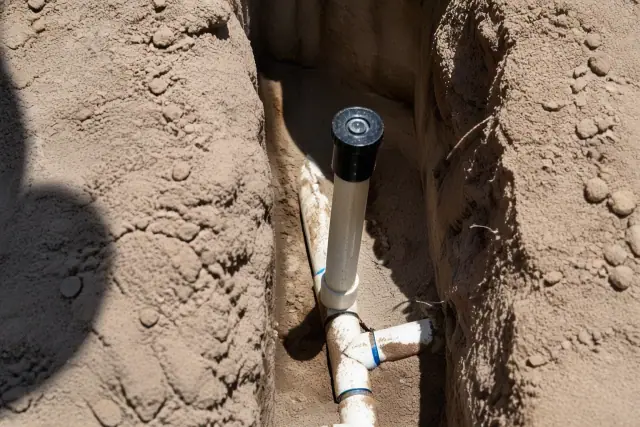
A technician repairing a sprinkler head and riser in an open trench in Phoenix, AZ.

We clear clogged heads, replace broken risers, reset heads knocked off grade, and match new parts to the existing rotor, fixed-spray, or impact pattern. Correct matching restores even coverage without changing the intended throw across a lawn or planting zone.

Request Estimate

Drip and Micro Irrigation Repair

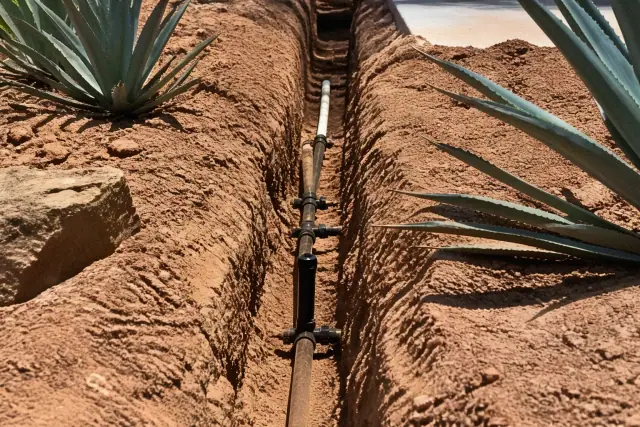
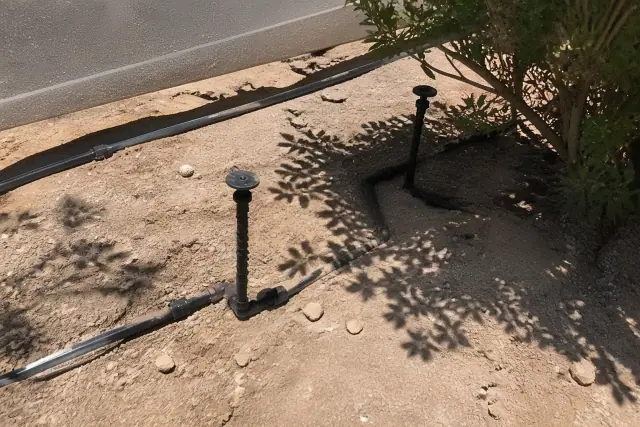
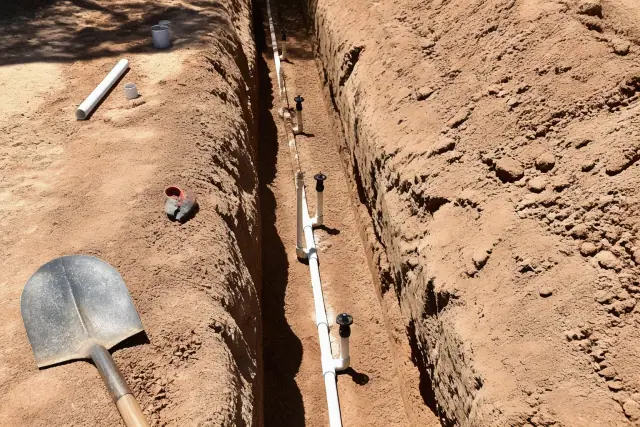
Drip and micro irrigation repair in a narrow trench with pipes and sprinkler heads in reddish Phoenix, AZ desert soil.

We replace sun-degraded quarter-inch tubing, clogged or blown emitters, and damaged poly drip line. Filter flushing and pressure-compensating emitter service restore controlled delivery for xeriscaping and drought-tolerant plantings.

Request Estimate

Mainline and Lateral Line Repair

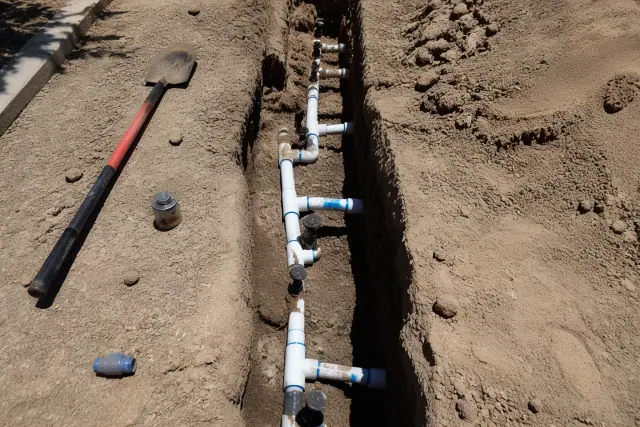
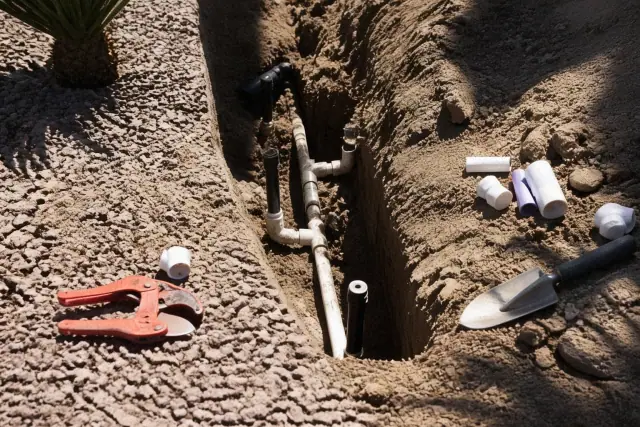
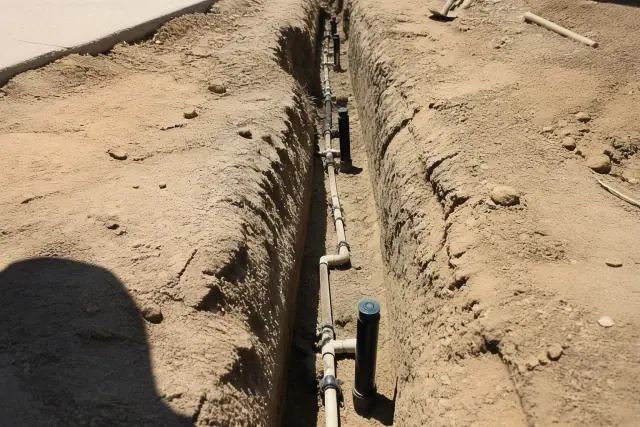
Exposed PVC pipes and sprinkler heads in a narrow irrigation trench during a system repair in Phoenix, AZ.

Pressure testing helps locate cracked PVC, failed tees, manifold fittings, and slow underground leaks without trenching an entire run. Where site conditions allow, directional boring or pipe bursting can reduce disruption to established desert landscaping and hardscape.

Request Estimate

Valve and Solenoid Repair

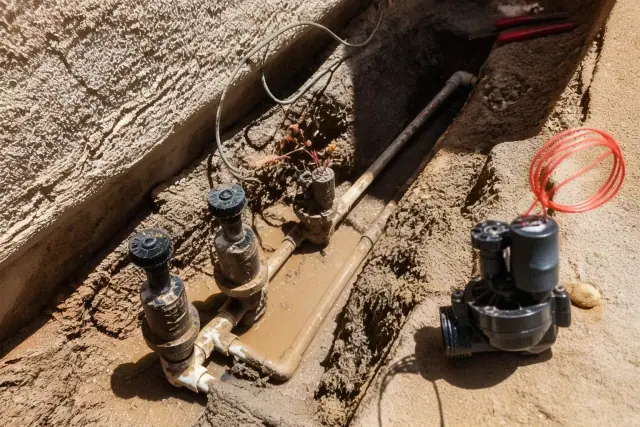
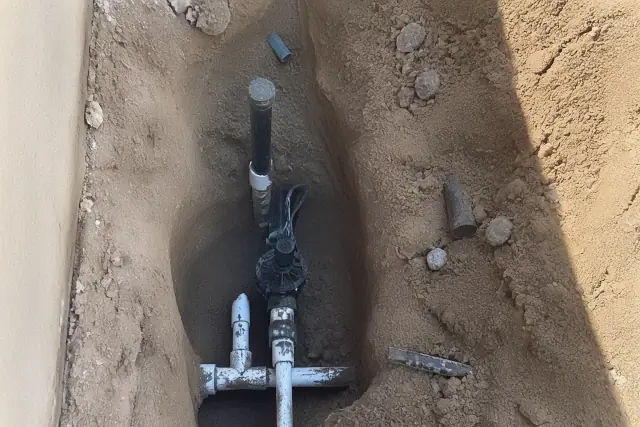
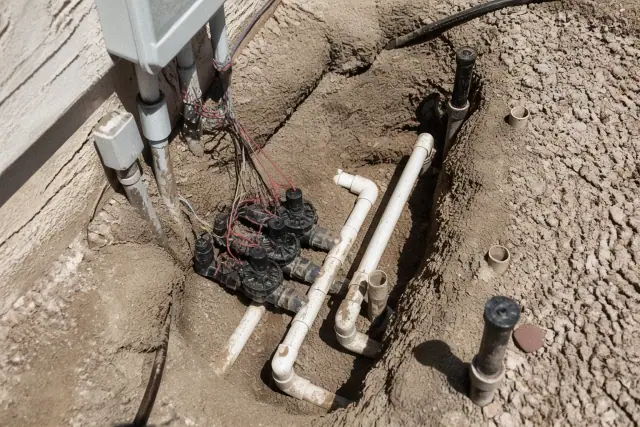
Irrigation pipe repair in a muddy trench with exposed wires and a new solenoid at a job site in Phoenix, AZ.

We replace failed solenoids and repair stuck manual or automatic valves at the manifold. Diaphragm service can correct a valve that will not close fully and causes constant weeping at the lowest head on its zone.

Request Estimate

Controller and Wiring Diagnostics

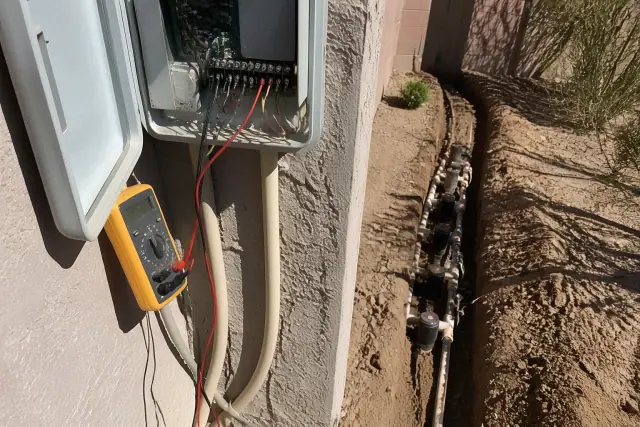
Multimeter connected to an open irrigation controller during a repair in a trench in Phoenix, AZ.

Controller programming, transformer output, battery condition, and zone-wire continuity are checked before parts are replaced. A multimeter helps trace low-voltage shorts caused by digging, landscape work, power surges, or failed connections.

Request Estimate

Seasonal Maintenance and Upgrades

Exposed irrigation pipes and sprinkler heads in a narrow trench during a system repair in Phoenix, AZ.

A full zone-by-zone inspection at least twice a year can catch alignment, valve, filter, and programming issues before peak summer use. We also adjust seasonal schedules and install smart controllers or pressure-regulated heads when an efficiency upgrade fits the property.

Request Estimate
Repair by System Type

Types of Irrigation Repair Options

Different irrigation layouts fail in different ways. We tailor diagnostics and repairs to spray zones, drip systems, buried supply lines, controls, and the operating needs of residential, HOA, and commercial properties.

Exposed pipes and sprinkler heads in an excavation for an irrigation system repair in Phoenix, AZ.

Sprinkler Zone Repairs

Spray and rotor zones need compatible heads, stable pressure, and correct alignment to cover turf without flooding nearby hardscape. Pressure-regulated heads can reduce water consumption by 30 to 50 percent compared with older conventional systems when an upgrade is appropriate.

  • Rotor, fixed-spray, and impact head matching
  • Broken riser and clogged nozzle replacement
  • Head-height, grade, and spray-pattern correction
  • Static and working pressure checks
  • Coverage balancing for lawns and planting beds
Request Estimate
Drip and micro irrigation system pipes and sprinkler heads in desert soil under the midday sun in Phoenix, AZ.

Drip and Micro Irrigation Systems

Drip systems limit evaporation around desert plantings but require clean filters, intact tubing, and controlled emitter output. Tubing and emitters past their eighth or tenth year of UV exposure often show widespread brittleness or clogging rather than one isolated defect.

  • Poly line and quarter-inch tubing replacement
  • Clogged or blown emitter replacement
  • Inline filter cleaning and line flushing
  • Pressure-compensating emitter checks
  • Run-time and output recalibration for xeriscaping
Request Estimate
Exposed mainline and piping system in an irrigation trench during a repair in Phoenix, AZ.

Mainline and Piping Systems

Buried mainlines and laterals can crack where caliche shifts, fittings degrade, or rodents damage poly tubing. Isolated pressure tests and targeted leak locating identify the failed section so repairs can use solvent-welded Schedule 40 PVC, brass, or Class 315 fittings suited to the connection.

  • Mainline and lateral pressure isolation
  • Cracked PVC, tee, and manifold fitting repair
  • Listening-equipment and soil-moisture leak locating
  • Directional boring or pipe bursting where site conditions allow
  • Insulation of exposed backflow preventers and vacuum breakers
Request Estimate
Irrigation repair showing valves, controllers, and wiring in an exposed trench in Phoenix, AZ.

Valves, Controllers, and Wiring

Control failures may start with a solenoid, valve diaphragm, transformer, battery, program, or buried low-voltage wire. Smart-controller efficiency upgrades can typically pay back their equipment cost within two to three years through water savings during Phoenix's long irrigation season.

  • Solenoid testing and replacement
  • Manual valve and diaphragm repair
  • Transformer and controller-output checks
  • Zone-wire continuity and short tracing
  • Timer reprogramming and smart-controller setup
Request Estimate
Exposed irrigation pipes and sprinkler heads during a system repair in a trench in Phoenix, AZ.

Residential, HOA, and Commercial Systems

Repair scope can range from quarter-acre lots in Ahwatukee to multi-zone commercial landscapes near Sky Harbor. Residential zones, HOA common areas, entry monuments, perimeter landscaping, and larger multi-valve manifolds each require coordinated testing and component matching.

  • Single-zone and multi-zone residential troubleshooting
  • Separate lawn, shrub, and drip-zone service
  • HOA common-area and entry-monument coordination
  • Commercial mainline and multi-valve manifold repair
  • Irrigation coordination during new planting phases
Request Estimate
Finding Your Right Fit

Choosing the Right Irrigation Repair Approach

The right approach depends on whether the symptom comes from pressure, flow, a buried break, a control fault, or normal component wear. We test the whole affected zone, explain the evidence, and recommend a spot repair, targeted restoration, recalibration, or efficiency upgrade that fits the system condition.

Pressure and Flow Diagnostics

Phoenix municipal water pressure typically runs 45 to 80 psi at the meter, but regulator restrictions, shutoff position, and distribution loss can reduce delivery at distant heads. We compare static and working readings at multiple points instead of guessing from one visible symptom.

Desert-Rated Repair Materials

Repairs use compatible Schedule 40 PVC, brass, Class 315 fittings, and industry-standard valve and controller components rated for desert conditions. Material selection accounts for UV exposure, caliche movement, mineral sediment, and Phoenix temperature swings.

Licensed and Insured Service

Phoenix Expert Landscaping is licensed and insured for irrigation repair. A free irrigation estimate and written scope show what was found, what needs repair, and what drives the cost before work begins.

Problems We Diagnose

Common Irrigation Problems We Fix in Phoenix

Heat, hard water, caliche, ground movement, power surges, and normal component wear create recognizable failure patterns across Phoenix irrigation systems. We trace each symptom through the affected zone so leaks, heads, valves, controls, pressure, and drip components receive the right repair.

Request a Free Repair Estimate

Leaking or Broken Lines

Caliche layers a few inches below grade can shift against PVC, while damaged poly line and failed manifold fittings may create soggy patches or a pressure drop across every zone. A rising water bill can reveal a slow mainline or lateral leak before the yard shows it.

Clogged or Damaged Heads

Mineral buildup, broken risers, mower contact, and foot traffic can block or knock heads off grade. Uneven spray patterns and brown patches can appear within days during summer heat when one part of a zone stops receiving water.

Stuck or Failed Valves

Failed solenoids, stuck manual valves, corrosion, or a damaged diaphragm can keep a zone from opening or closing correctly. Constant weeping at the lowest head often points to a valve that is not sealing fully.

Controller and Wiring Faults

Monsoon power surges, battery failure, incorrect programming, transformer problems, and damaged low-voltage wiring can leave one or more zones inactive. Continuity and output testing separates a controller fault from a buried wire short or valve problem.

Low Pressure and Uneven Coverage

An undersized pressure regulator, partially closed shutoff, hidden leak, or distribution loss can starve heads at the far end of a zone. Multiple pressure readings reveal where delivery falls instead of treating every weak head as a separate failure.

Clogged Drip Emitters

Hard-water minerals can restrict inline filters and pressure-compensating emitters, while UV exposure makes tubing brittle. Line flushing, filter service, emitter replacement, and output recalibration restore consistent volume without overwatering drought-tolerant plants.

How It Works

Our Irrigation Repair Process

Most calls fall into three broad categories: line leaks, head failures, and valve or controller issues. Our six-step process still checks the connected system so a visible symptom does not hide a pressure, flow, or electrical cause elsewhere in the zone.

01.

Walk the Property

We review the reported symptom, valve boxes, controller, visible piping, and the lawn, shrub, drip, or commercial areas served by the affected system. Wet spots, brown patches, and recent landscape or digging work help establish where testing should begin.

02.

Run Every Zone

Each zone is activated to compare head patterns, emitter flow, valve response, and coverage at near and distant points. This reveals whether the issue is isolated to one component or shared across a manifold or supply line.

03.

Test Pressure and Controls

We compare static and dynamic pressure, check zone flow, test transformer output, and verify low-voltage wire continuity. A multimeter and readings at multiple points help distinguish hydraulic problems from electrical faults.

04.

Locate and Isolate Damage

Valve-manifold isolation, listening equipment, and soil-moisture patterns narrow the location of buried damage. Targeted locating keeps trenching as limited as possible around established roots, desert landscaping, and hardscape.

05.

Review the Written Scope

We explain the test results and provide a written repair scope through the free irrigation estimate. You can see which component failed, which repair is recommended, and what drives the cost before work starts.

06.

Repair, Recalibrate, and Verify

A final system run measures pressure, valve response, spray coverage, or emitter output. Controller programs and run times are recalibrated when needed so restored flow matches current landscape requirements.

Get Your System Back on Track

Schedule a Free Irrigation
Repair
Estimate

Tell us about weak coverage, a leaking line, a failed zone, or a controller issue. We will inspect the system, explain the findings, and outline the repair before work begins.

Irrigation Help

Phoenix Irrigation Repair FAQs

These answers cover common questions about Phoenix irrigation failures, repair costs, maintenance, water efficiency, and service scope. A system inspection is still the best way to separate a visible symptom from its underlying cause.

Call Our Experts

An Irrigation Grandfathered Right, or IGR, is a groundwater right created under Arizona's 1980 Groundwater Management Act for land that was actively irrigated before January 1, 1980. It allows continued groundwater extraction on qualifying properties in Active Management Areas where new groundwater rights are otherwise restricted or prohibited by state law.

Sprinkler repairs in Phoenix typically cost $130 to $400 depending on the problem. Individual head replacements generally run $65 to $180, while underground supply-line repairs run $300 to $850; a written scope explains the specific cost before repairs begin.

We isolate sections with pressure tests, then use listening equipment and soil-moisture patterns to narrow the break location before digging. This targeted approach reduces unnecessary trenching around established root zones, desert landscaping, and hardscape.

The three broad problem groups are leaking or broken lines, clogged or damaged heads, and valve or controller failures. Soggy patches, rising water bills, brown areas, weak spray, inactive zones, or constant weeping at a low head all justify a system check.

We recommend a complete zone-by-zone inspection at least twice a year. Checking head alignment, valves, filters, and controller programming can catch small failures before they grow into a $500 mainline repair during peak summer use.

Watering demand changes sharply between January and July. Systems may run daily in summer, while winter programs often drop to one or two cycles per week; a March startup inspection clears filter debris, and fall adjustments reduce run times as evapotranspiration falls.

Phoenix municipal pressure typically measures 45 to 80 psi at the meter, but distribution loss, an undersized regulator, a partially closed shutoff, or a hidden leak can reduce pressure farther down the zone. Static and working readings at multiple points show where the drop begins.

Smart controllers and pressure-regulated heads can reduce water consumption by 30 to 50 percent compared with older conventional systems when they fit the property. During Phoenix's long irrigation season, water savings from an efficiency upgrade typically repay the equipment cost within two to three years.

Mineral sediment from Valley water sources can clog inline filters and pressure-compensating emitters, while UV exposure can make quarter-inch tubing brittle. We flush lines, service filters, replace damaged emitters or tubing, and recalibrate output; efficient drip delivery also supports Arizona Department of Water Resources and Phoenix AMA conservation goals.

A failed solenoid, stuck manual valve, corrosion, or damaged diaphragm can prevent a valve from closing completely. Constant weeping at the lowest head on a zone is a common sign, and testing determines whether the valve needs adjustment, a rebuild, or replacement.

Frozen buried pipes are rare because Phoenix soil does not freeze at typical irrigation depth, but exposed backflow assemblies can still be vulnerable during a hard cold snap. Winterization here focuses on insulating backflow preventers and vacuum breakers rather than draining buried lines.

Yes. Phoenix Expert Landscaping works on single-zone and multi-zone homes, HOA common areas and entry monuments, and commercial properties with larger mainlines or multi-valve manifolds throughout Phoenix, Scottsdale, Tempe, Mesa, Glendale, Chandler, and Peoria.

We walk the property, run the affected zones, test pressure, flow, valves, controls, and wiring as needed, and check backflow-preventer function against Phoenix Water Services Department cross-connection requirements. You receive a written scope explaining the failure, recommended repair, and cost before work begins.