Rock and Native Plant Xeriscape
With roughly 8 inches of rainfall a year, Phoenix desert landscapes commonly replace thirsty sod with decomposed granite, accent boulders, native shrubs, and drought-tolerant trees.
Phoenix Expert Landscaping designs and maintains yards across Maricopa County's low desert, where landscapes must handle 110-degree summers and monsoon downpours. Popular choices pair rock groundcover, native shade trees, low-water planting beds, and outdoor living areas in a plan suited to the Sonoran Desert.
With roughly 8 inches of rainfall a year, Phoenix desert landscapes commonly replace thirsty sod with decomposed granite, accent boulders, native shrubs, and drought-tolerant trees.
A canopy tree, mid-height shrubs, and low groundcover succulents can make a bed look full in year one. Spring wildflowers and fall-blooming salvia can extend color nearly year-round.
Gravel patios, artificial turf pads, fire pit gathering areas, and pergola-covered seating make backyards more usable during the milder months from October through April.
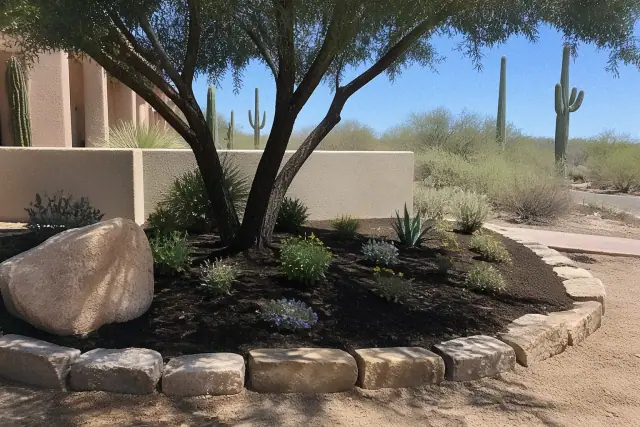
A canopy tree above mid-height flowering shrubs and low succulents. The layers demonstrate how a desert bed gains shade, texture, and a finished appearance.
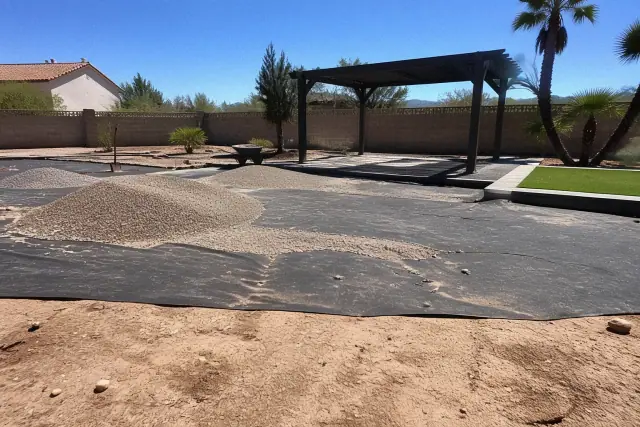
A shaded seating area connected to a gravel patio and a small pet or play turf pad. This illustrates how separate backyard uses can share one low-water layout.
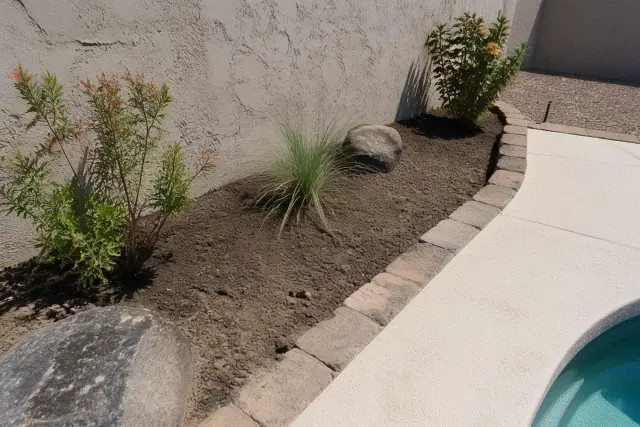
Splash-tolerant plants with root balls and drip lines set clear of pool coping and equipment. The spacing explains why poolside plant placement matters.
3/8-inch minus decomposed granite is a common valley surface because it drains during monsoon downpours and resists the washout bark mulch can suffer in a heavy July storm.
Palo verde, mesquite, and desert willow provide real canopy shade without overtaxing low-desert irrigation. Placement near west-facing patios can reduce radiant heat and extend outdoor use.
Boulders sized 18 to 36 inches can define planting zones and create elevation change on otherwise flat Phoenix lots before the plant layers go in.
Full backyard landscape projects in the Phoenix area typically run $1,500 to $20,000-plus, depending on square footage, hardscape, and plant maturity.
| Yard Goal | Popular Fit | Key Design Check |
|---|---|---|
| Use less outdoor water | Decomposed granite with native and drought-tolerant plants | Plan limited turf, efficient drip irrigation, and planting zones. |
| Create usable shade | Palo verde, mesquite, or desert willow | Map west sun and afternoon shade before placing trees. |
| Add gathering space | Gravel patio, turf pad, pergola, or fire pit area | Connect seating to paths, rock borders, and irrigation lines. |
| Landscape around a pool | Splash-tolerant plants with controlled root placement | Keep root balls and drip lines clear of coping and equipment. |
A successful desert garden is a planned composition of texture, bloom timing, shade, and water use rather than simply cactus and gravel. The Arizona Municipal Water Users Association describes seven xeriscape principles: planning and design, limited turf, efficient irrigation, soil improvement, mulch, appropriate plant choice, and appropriate maintenance. Rock, pathways, patios, and layered planting turn those principles into a yard that feels intentional.
Sun exposure comes first: a yard that bakes in west sun needs a different plant and shade plan than one protected by an afternoon block-wall shadow. Around pools, roots must not heave decking, plants must tolerate splash and chlorine, and irrigation must stay clear of coping and equipment. Drought-tolerant does not mean no-water; established plants typically need far less after one to two irrigation cycles of adjustment. Hardscape such as pathways and retaining walls should establish the yard's structure before planting begins.
Which plants are reliable? For Maricopa County's Sunset Zone 13 climate, useful choices include palo verde, mesquite, desert willow, Texas ebony, red bird of paradise, brittlebush, agave, aloe, and barrel cactus. How quickly do succulents establish? They usually settle in within one growing season and then need almost no supplemental water. How often is maintenance needed? Recurring visits cover irrigation checks, weed control, pruning, and cleanup, with more frequent attention during spring growth and monsoon season and lighter visits in the dead heat of July and August.
Share your yard goals, sun exposure, preferred plant layers, and outdoor living priorities. Phoenix Expert Landscaping can help shape those details into a desert-adapted plan for your property.