Typical Price Ranges
Routine care is usually priced per visit or month, one-time labor by the hour, and larger installation work per square foot or as a flat project bid.
Phoenix Expert Landscaping explains what Arizona homeowners should expect before comparing landscaping quotes: general Phoenix-area labor commonly runs $45-$85 per hour, while a full backyard renovation typically falls between $20,000 and $50,000. The final price depends on the service, lot size, soil, irrigation, plant material, and billing method.
Routine care is usually priced per visit or month, one-time labor by the hour, and larger installation work per square foot or as a flat project bid.
Lot size, hard caliche, plant density, irrigation access, equipment needs, and seasonal demand determine how much labor and material a job requires.
Before comparing bids, confirm whether each price is hourly, per visit, monthly, per square foot, or flat rate and ask what labor, materials, and frequency are included.
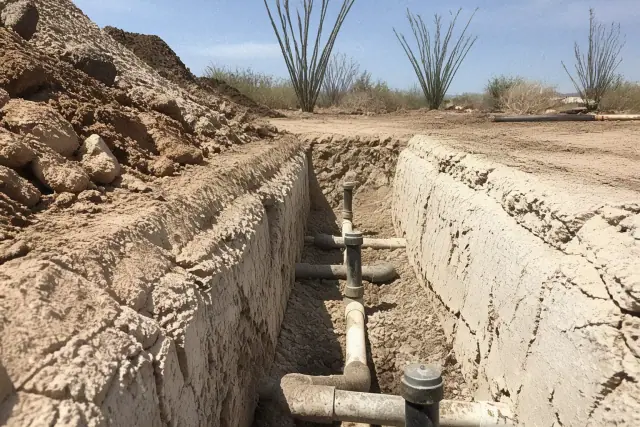
A planting or irrigation trench cutting through hard caliche beside an aging drip line. This context explains why difficult digging and buried-valve diagnostics add labor.
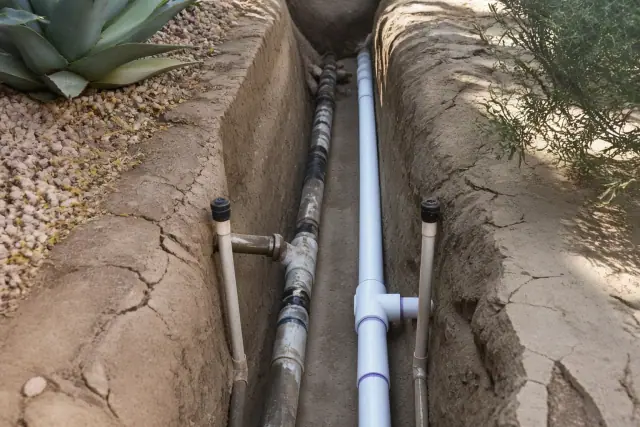
Contrast routine mowing and trimming on a residential lot with grading, rock placement, planting, and irrigation trenching. The difference in crew time and materials explains the different billing models.
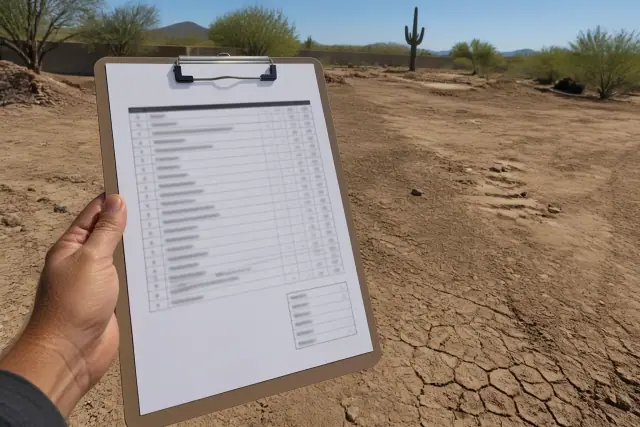
A written estimate that separates labor, materials, service frequency, and project scope. A clear breakdown makes it easier to compare like-for-like quotes.
Mowing, edging, weed control, shrub trimming, and irrigation checks are commonly bundled by visit frequency, so the included tasks matter as much as the monthly number.
A small, limited-scope spring cleanup in Arcadia was quoted at $150, while broader seasonal cleanups generally cost more. Irrigation diagnosis and repair are usually hourly because buried lines, valves, and controllers take different amounts of time to trace.
Desert conversions and backyard renovations combine grading, soil amendment, rock or gravel, plant material, and irrigation retrofitting, so they are typically priced per square foot or by full project scope.
Palm trimming is often priced per tree, while mowing a one-acre lot is priced per visit. Aerial equipment, larger crews, access, and hauling can change the final total.
| Landscaping Service | Typical Phoenix Range | Billing Method |
|---|---|---|
| General landscape labor | $45-$85 per hour | Hourly |
| Weekly lawn mowing | $40-$70 per visit | Per visit |
| Biweekly maintenance | $85-$150 per visit | Per visit |
| Monthly maintenance on an 8,000-10,000 sq ft lot | $110-$400 per month | Monthly |
| Seasonal yard cleanup | $300-$500 | Flat rate |
| Complete landscape installation | $4.50-$17 per sq ft; average $9 | Per square foot |
| Full backyard renovation | $20,000-$50,000 | Project flat rate |
| Palm tree trimming | $60-$80 per tree | Per tree |
| One-acre lot mowing | $58-$106 per visit | Per visit |
Arizona landscaping is usually billed in three ways: recurring maintenance per visit or month, one-time labor by the hour, and installation by square foot or flat project bid. A biweekly Paradise Valley route, a one-day monsoon-debris cleanup, and a multi-week xeriscape installation require different crews, equipment, and scheduling. Ask which model applies and compare written breakdowns of labor, materials, and service frequency. For work over $1,000, confirm that a landscape contractor holds the required Arizona Registrar of Contractors license; irrigation work connected to municipal water lines also requires applicable backflow-prevention compliance recognized by City of Phoenix Water Services.
Larger yards require more labor and materials, although per-square-foot pricing can ease as total area grows. Caliche across the Salt River Valley may require augering or jackhammering for planting holes and irrigation trenches, while aging drip systems and buried valve problems add diagnostic time. Desert-adapted paloverde, agave, and ocotillo generally cost less to maintain than turf, but mature specimen trees raise material and equipment costs. Spring and fall cleanup demand affects schedules, and summer crews may start before sunrise to avoid triple-digit heat. Commercial properties need different crew sizes and contract frequencies, while HOA rules in Anthem or Verrado may require specific plant palettes or rock colors.
Is $100 an hour too much? It is above the typical range for routine Phoenix maintenance but may fit irrigation troubleshooting, aerial tree work, or design consultation that requires specialized equipment or expertise. Two hours of general yard work at standard rates is roughly $90-$170 before materials, although overgrowth or debris hauling can make a flat cleanup bid more useful once the job exceeds a couple of hours. The customer rate is not the worker's take-home pay; it also covers equipment, insurance, overhead, and material handling. Straightforward irrigation repairs such as an emitter or valve may take one to two hours, while an intermittent zone failure or a buried line in caliche can take longer.
Share the service, lot size, visit frequency, soil conditions, and any irrigation or access concerns. A written estimate that separates labor, materials, and frequency gives you a property-specific number to compare.